
Ashwagandha Dosage for Testosterone: Evidence and Safety

Short answer: Human studies do not establish one universal ashwagandha dosage for increasing testosterone. Trials have used different extracts, concentrations and doses, so “600 mg” of one product may not be equivalent to 600 mg of another. Limited evidence suggests that certain standardized extracts may modestly increase testosterone in some men, but the research is too small and inconsistent to treat ashwagandha like testosterone therapy.
Ashwagandha can also cause side effects, interact with medications and, rarely, has been linked to liver injury. Product-specific labeling and medical context matter more than copying a dose from a study.
Key takeaways
- There is no clinically established “best” ashwagandha dose for testosterone.
- Studies use specific root extracts with defined withanolide content; results cannot be generalized to every powder or gummy.
- Some small trials report testosterone changes, while many important outcomes remain uncertain.
- Short-term use appears tolerable for many adults, but long-term safety is not established.
- Pregnancy, breastfeeding, thyroid or autoimmune disorders, upcoming surgery and several medications require particular caution.
What is ashwagandha?
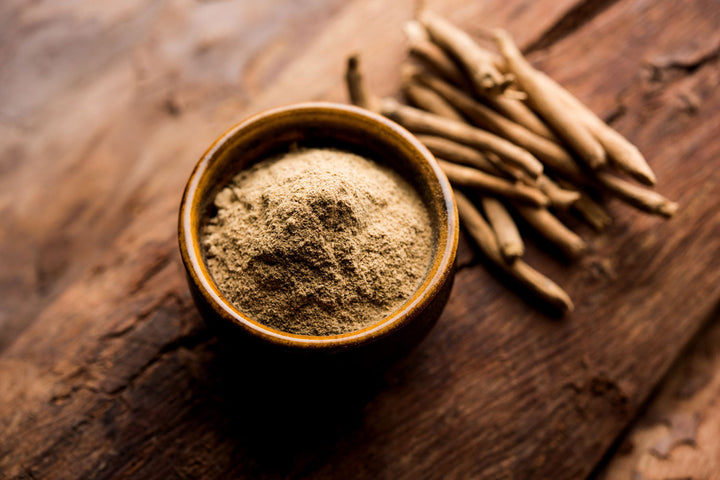
Ashwagandha (Withania somnifera) is a botanical used in Ayurvedic traditions. Supplements may contain root powder, root extract, root-and-leaf extract or proprietary standardized preparations. These are not interchangeable.
Withanolides are a group of naturally occurring compounds often used to standardize extracts. Two products with the same milligram amount can deliver very different quantities of these compounds and may have been produced with different solvents or plant parts.
Does ashwagandha increase testosterone?
The National Center for Complementary and Integrative Health describes the evidence as limited. Some preparations taken for two to four months may increase testosterone levels and sperm quality, but many studies are small and use different products.[1]
In a 2019 randomized crossover trial, 57 overweight men ages 40 to 70 with mild fatigue received a standardized extract or placebo. After eight weeks, the ashwagandha phase was associated with a greater increase in salivary testosterone and DHEA-S. There were no significant between-group improvements in fatigue, vigor or sexual well-being, and the authors called for larger studies.[2]
That study did not measure semen quality. Older articles sometimes combine it with separate infertility research, creating a result that no single trial actually reported.
A second randomized trial combined resistance training with 300 mg of a specific root extract twice daily for eight weeks. Participants receiving the extract had larger changes in strength, muscle size and testosterone than the placebo group.[3] Because the intervention included structured training and one particular extract, the findings do not show that any ashwagandha product produces the same effect.
What doses have studies used?
Common research regimens include approximately 300 mg of a standardized root extract twice daily, but other trials use different extracts, withanolide concentrations or total daily amounts. Some concentrated preparations deliver a much smaller milligram dose.
This is why an evidence-based answer cannot be reduced to one number. The useful questions are:
- Which plant parts are used?
- Is it a powder or extract?
- What is the standardization and withanolide content?
- Was that exact preparation studied?
- Does the label provide a tested serving and independent quality verification?
Do not take more than the product label or combine several ashwagandha products to imitate a trial.
How long does it take?
Studies reporting hormonal changes generally lasted about eight to twelve weeks. That does not guarantee that an individual will experience a meaningful change, and evidence beyond about three months is limited.
If symptoms suggest low testosterone, using ashwagandha as a self-test can delay a proper diagnosis. The Endocrine Society recommends confirming hypogonadism with symptoms plus consistently low morning testosterone measurements.[4]
Safety and side effects
Reported short-term side effects include stomach upset, diarrhea, vomiting and drowsiness. Rare cases of liver injury have been linked to ashwagandha products.[1]
Ashwagandha should be avoided during pregnancy and breastfeeding. NCCIH also advises against its use for people about to have surgery and does not recommend it for people with autoimmune or thyroid disorders. It may interact with:
- Diabetes medicines
- Blood-pressure medicines
- Immunosuppressants
- Sedatives
- Anti-seizure medicines
- Thyroid hormone medicines
People with hormone-sensitive prostate cancer should avoid ashwagandha because it may influence testosterone. Anyone who develops yellowing of the skin or eyes, dark urine, severe itching, unusual fatigue or persistent abdominal symptoms should stop the product and seek medical advice.
How to evaluate an ashwagandha product
- Look for the scientific name Withania somnifera.
- Confirm whether the product uses root, leaf or both.
- Check the extract ratio or standardization rather than milligrams alone.
- Prefer a manufacturer that provides lot testing for identity and contaminants.
- Avoid products making disease-treatment or guaranteed testosterone claims.
A supplement cannot diagnose low testosterone, and a small change in a laboratory value is not automatically a meaningful improvement in symptoms, fertility or body composition. See our review of testosterone and fat loss for another example of why hormone numbers and clinical outcomes should be separated.
Frequently asked questions
Is 600 mg of ashwagandha enough to increase testosterone?
Some studies have used 600 mg per day of a specific standardized extract, but that does not establish an effective dose for every product or person.
Should ashwagandha be taken in the morning or at night?
Testosterone research does not establish a superior time of day. Because some people experience drowsiness or stomach upset, timing may be individualized within the product instructions.
Can women take ashwagandha for testosterone?
There is no established testosterone-boosting indication for women. Pregnancy and breastfeeding are contraindications, and hormone-related symptoms deserve an appropriate evaluation.
Can ashwagandha replace TRT?
No. A botanical supplement is not a substitute for medically indicated testosterone therapy, and TRT should only be considered after a proper diagnosis.
Can I take ashwagandha indefinitely?
Long-term safety has not been established. NCCIH notes that short-term use up to about three months may be safe for many people, but evidence is insufficient for longer use.
The bottom line
Several small trials suggest that particular ashwagandha extracts may modestly affect testosterone in some men, but there is no universal evidence-based dose. Match any decision to the exact product, its standardization, your medications and your health history. Do not use ashwagandha to self-diagnose or replace care for suspected hypogonadism.
Sources
- National Center for Complementary and Integrative Health. Ashwagandha: Usefulness and Safety.
- Lopresti AL, et al. A randomized, double-blind, placebo-controlled, crossover study examining the hormonal and vitality effects of ashwagandha in aging, overweight males. American Journal of Men’s Health. 2019.
- Wankhede S, et al. Examining the effect of Withania somnifera supplementation on muscle strength and recovery. Journal of the International Society of Sports Nutrition. 2015.
- Endocrine Society. Testosterone Therapy for Hypogonadism Guideline Resources.
Evidence reviewed August 2026. This article is educational and is not a substitute for individualized medical diagnosis or treatment.
The information on noophoric.com is for informational and educational purposes only and is not intended to be medical advice. Readers should consult with a qualified healthcare professional before making changes to diet, nutrition, supplementation, medication, or lifestyle.