
Low Testosterone Under 30: Symptoms, Causes, and Testing

Low testosterone can occur in men under 30, but common symptoms such as fatigue, low mood, poor gym progress, or reduced motivation do not prove a hormone disorder. Sleep loss, under-eating, obesity, medications, depression, overtraining, and acute illness can cause similar symptoms and may temporarily lower a test result.
A diagnosis of hypogonadism requires compatible symptoms plus consistently low testosterone on properly timed blood tests. In younger men, finding the cause and protecting future fertility are especially important.
What does low testosterone mean in a younger man?
Testosterone production is controlled by a signaling pathway that connects the hypothalamus, pituitary gland, and testes. A problem can occur at the testes, called primary hypogonadism, or in the brain's hormonal signaling, called secondary hypogonadism.
The Endocrine Society recommends diagnosing hypogonadism only when a man has symptoms or signs of testosterone deficiency and unequivocally, consistently low serum testosterone.1 A single low value after poor sleep, illness, hard training, or inadequate food intake is not enough.
Symptoms that deserve a closer look
The most informative symptoms are related to sexual and reproductive function. These include:
- Reduced sexual desire
- Fewer spontaneous or morning erections
- Erectile dysfunction
- Infertility or a low sperm count
- Small or shrinking testes
- Breast tenderness or enlargement
- Loss of facial or body hair
- Delayed or incomplete puberty
Low muscle mass, reduced strength, anemia, and low bone density can also occur. Fatigue, irritability, depressed mood, and trouble concentrating may be present, but these are less specific. Our review of low testosterone and depression explains why symptoms alone cannot establish the cause.
Common causes of low testosterone under 30
Temporary or functional causes
Testosterone can fall temporarily during severe illness, poor nutrition, rapid weight loss, excessive exercise, or major sleep disruption. Obesity can reduce SHBG and measured total testosterone. Sleep apnea, type 2 diabetes, liver or kidney disease, and other chronic conditions can also affect levels.2
Medications matter. Opioid pain medicines, glucocorticoids, some cancer treatments, and prior anabolic steroid use can suppress the hormone pathway. Do not stop a prescription without medical guidance.
Testicular causes
Injury, torsion, infection, chemotherapy, radiation, genetic conditions such as Klinefelter syndrome, and some autoimmune or developmental disorders can impair testosterone production in the testes.
Pituitary or hypothalamic causes
Pituitary tumors, high prolactin, head injury, genetic conditions such as Kallmann syndrome, iron overload, and other disorders can interrupt the signals that tell the testes to make testosterone. Headaches, vision changes, or milky nipple discharge with low testosterone require prompt medical attention.
How low testosterone should be tested
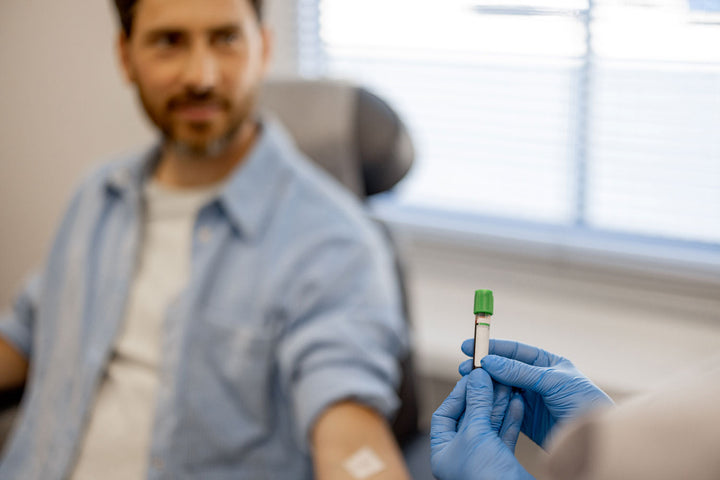
Testing generally starts with total testosterone in the early morning, when levels are usually highest. If the result is low, it should be repeated on a different morning, ideally fasting and when you are not acutely ill.1
Further testing may include:
- Free testosterone and SHBG: Helpful when total testosterone is borderline or SHBG may be altered.
- Luteinizing hormone and follicle stimulating hormone: Help distinguish a testicular cause from a pituitary or hypothalamic cause.
- Prolactin: May reveal a pituitary issue when secondary hypogonadism is suspected.
- Iron studies, thyroid testing, or imaging: Used only when the history and initial results indicate a need.
- Semen analysis: Important when fertility is a concern.
See our step-by-step article on how testosterone testing works.
What level is considered low?
There is no universal cutoff that can be interpreted without the laboratory method, reference range, symptoms, and repeat testing. One harmonized research range for healthy, nonobese men ages 19 to 39 was 264 to 916 ng/dL, but that range should not be used to self-diagnose.3
A value near the lower limit can have different meanings depending on SHBG, free testosterone, health status, and symptoms. Our guide to testosterone ranges by age and sex explains why laboratory-specific interpretation matters.
Treatment depends on the cause
There is no single treatment for every younger man with a low result.
Address reversible contributors
A clinician may first address inadequate nutrition, obesity, sleep apnea, uncontrolled chronic disease, medication effects, or anabolic steroid use. A 2024 review of male hypogonadism describes health optimization as the main approach for functional low testosterone when no permanent structural or genetic disorder is found.4
Treat an underlying medical disorder
Pituitary disease, genetic conditions, testicular injury, or other organic causes may require specialist care. Treatment can involve endocrinology, urology, reproductive medicine, or another specialty depending on the cause.
Consider testosterone only after diagnosis
Prescription testosterone can improve some symptoms in men with confirmed hypogonadism. It also requires monitoring and is not a shortcut for strength, appearance, or athletic performance.
Fertility must be discussed before treatment
Exogenous testosterone suppresses luteinizing hormone and follicle stimulating hormone. Sperm production can fall sharply or stop. The American Urological Association and American Society for Reproductive Medicine state that clinicians should not prescribe exogenous testosterone to men interested in current or future fertility.5
Recovery after stopping testosterone often occurs, but it can take months and occasionally much longer. A younger man who may want children should discuss fertility preservation and alternative treatments with a reproductive urologist or endocrinologist before starting therapy.
What not to do
- Do not diagnose yourself from one home or afternoon test.
- Do not buy testosterone or anabolic steroids online.
- Do not assume a supplement can treat pituitary or testicular disease.
- Do not start testosterone without discussing fertility.
- Do not ignore headaches, vision changes, testicular changes, or delayed puberty.
Frequently asked questions
Is low testosterone common under 30?
It is less common than in older men, but it does occur. Temporary reductions and nonspecific symptoms are also common, which is why repeat morning testing and a cause-focused evaluation are essential.
Can poor sleep lower testosterone?
Sleep disruption and sleep disorders can affect hormone production. One poor night does not establish a chronic problem, but testing after unusually poor sleep may produce a result that does not reflect a stable baseline.
Can testosterone therapy permanently cause infertility?
Testosterone can suppress sperm production, sometimes to zero. Sperm production often recovers after treatment stops, but the timing is unpredictable and recovery is not guaranteed for every individual. Discuss fertility before treatment.
Bottom line
Low testosterone under 30 is a diagnosis that requires symptoms, repeat morning testing, and an evaluation for the cause. Temporary health factors, medication effects, pituitary disease, testicular problems, and genetic conditions can all be involved. Because exogenous testosterone can suppress fertility, younger men should avoid self-treatment and seek a cause-focused medical evaluation.
Sources
- Endocrine Society. Testosterone Therapy for Hypogonadism Guideline Resources.
- Endocrine Society. Hypogonadism in Men.
- Travison TG, et al. Harmonized Reference Ranges for Circulating Testosterone Levels in Men of Four Cohort Studies in the United States and Europe. Journal of Clinical Endocrinology and Metabolism. 2017.
- De Silva NL, et al. Male Hypogonadism: Pathogenesis, Diagnosis, and Management. The Lancet Diabetes and Endocrinology. 2024.
- American Urological Association and American Society for Reproductive Medicine. Diagnosis and Treatment of Infertility in Men. Amended 2024.
Evidence reviewed August 2026. This article is educational and is not a substitute for individualized medical diagnosis or treatment.


The information on noophoric.com is for informational and educational purposes only and is not intended to be medical advice. Readers should consult with a qualified healthcare professional before making changes to diet, nutrition, supplementation, medication, or lifestyle.