
Does Sleep Increase Testosterone? How Much Sleep Men Need

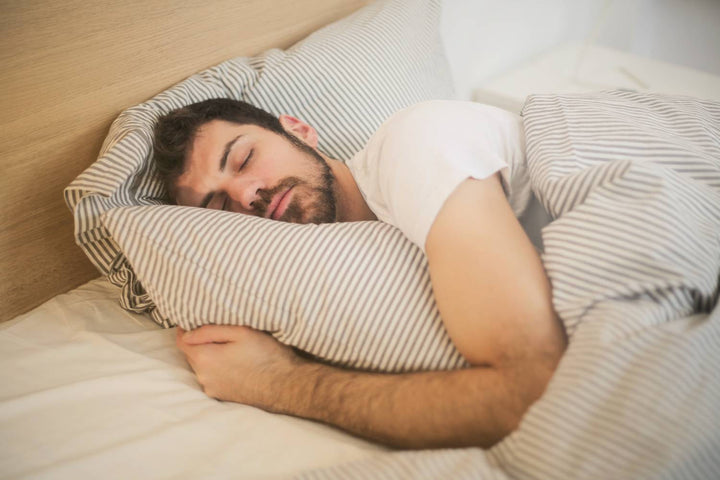
Getting enough sleep may help your body maintain normal testosterone regulation, especially if you are routinely sleep deprived. But sleeping longer is not a guaranteed way to raise testosterone, and a single short night does not automatically cause low testosterone. The strongest practical target for most adults is at least seven hours of regular, good-quality sleep, with many people functioning best closer to seven to nine hours.
Key takeaways
- Testosterone normally rises during sleep and is usually highest in the morning.
- Severe sleep loss can reduce testosterone, but studies of modest short-term restriction have produced mixed results.
- Adults should regularly get at least seven hours of sleep. Seven to nine hours is an appropriate range for many adults.
- More sleep is most likely to help when it corrects an existing sleep deficit. It is not a treatment for clinically low testosterone.
- Loud snoring, gasping, breathing pauses, or persistent daytime sleepiness can justify an evaluation for sleep apnea.
What is the connection between sleep and testosterone?
Testosterone production follows a daily rhythm. In healthy young men, levels begin rising around sleep onset, increase through the night, and are typically highest during the early morning. Research also suggests that the rise is connected to normal sleep architecture, including the first period of rapid eye movement sleep.
This does not mean every hour of sleep produces a predictable percentage increase in testosterone. Hormone levels are influenced by age, body composition, illness, medications, calorie intake, alcohol use, testing time, and individual biology. Sleep is one part of that larger system.
The most accurate way to think about the relationship is that sufficient, regular sleep supports normal hormone regulation. Inadequate or severely disrupted sleep may interfere with it.
Does more sleep increase testosterone?
More sleep may help if you are not currently meeting your sleep needs. For example, moving from chronically short nights toward a consistent, adequate schedule may remove one factor that can interfere with normal testosterone production. There is not good evidence that extending already adequate sleep will keep pushing testosterone higher.
Observational studies can find associations between sleep and testosterone, but they cannot prove that sleep duration caused the hormone difference. Men who sleep poorly may also differ in weight, stress, alcohol use, exercise, medical conditions, or work schedules. These factors can affect both sleep and testosterone.
A recent genetic analysis also found no significant causal association between genetically predicted sleep duration and testosterone measures. That result does not make sleep unimportant. It reinforces that the relationship is more complex than “one extra hour equals more testosterone.”
How much sleep should men get for healthy testosterone?
The American Academy of Sleep Medicine and Sleep Research Society recommend that adults regularly sleep seven or more hours per night to promote optimal health. Their expert panel also concluded that seven to nine hours is an appropriate range for adult health.
There is no separate evidence-based sleep target guaranteed to maximize testosterone. A useful goal for most men is to build a schedule that allows roughly seven to nine hours, then judge whether it produces consistent daytime energy, alertness, and recovery.
Some people need more than nine hours while recovering from accumulated sleep loss, during illness, or in young adulthood. Regularly sleeping longer does not necessarily mean testosterone will be higher. If you sleep a long time but remain exhausted, the issue may be sleep quality, a sleep disorder, medication effects, depression, or another health condition.
What research says about sleep deprivation and testosterone
A widely discussed 2011 laboratory study examined ten healthy young men after three nights with up to ten hours in bed and then eight nights with five hours in bed. Daytime testosterone concentrations were lower during the sleep-restricted portion of the study. The study was small, however, and it should not be treated as proof that every person will experience the same change.
Other controlled studies have not always replicated that result. A 2019 report combining randomized studies of acute total sleep deprivation and several nights of restricted sleep did not find a significant effect on testosterone concentrations.
A 2021 systematic review and meta-analysis helps explain the disagreement. Across 18 studies involving 252 men, short-term partial sleep deprivation did not produce a statistically significant reduction in testosterone. Total sleep deprivation lasting at least 24 hours did reduce testosterone.
The responsible conclusion is not that ordinary sleep loss never matters. It is that the size and timing of the effect depend on how severe the deprivation is, how long it lasts, when blood is collected, and who is being studied. Chronic real-world sleep restriction may also differ from a short laboratory experiment.
Sleep quality matters, not only time in bed
Eight hours in bed is not always eight hours of restorative sleep. Frequent awakenings, irregular schedules, alcohol-related sleep disruption, pain, restless legs, and breathing problems can reduce sleep quality.
Obstructive sleep apnea deserves particular attention. It causes repeated narrowing or closure of the airway during sleep, which can fragment sleep and lower oxygen levels. A meta-analysis of 24 case-control studies found that men with obstructive sleep apnea had lower total testosterone than controls. The studies were highly variable, so the result shows an association rather than proof that sleep apnea directly caused low testosterone.
Treating sleep apnea is important for sleep, daytime function, and broader health. It should not be sold as a guaranteed testosterone treatment. Meta-analyses have not found that continuous positive airway pressure, or CPAP, consistently raises testosterone.
Talk with a clinician about sleep apnea screening if you have loud habitual snoring, witnessed breathing pauses, choking or gasping during sleep, morning headaches, resistant high blood pressure, or significant daytime sleepiness.
Why testosterone is usually tested in the morning
Testosterone varies across the day, and its morning peak can be affected by sleep timing. That is one reason a random afternoon test cannot reliably diagnose testosterone deficiency.
The Endocrine Society recommends diagnosing hypogonadism only when a man has relevant symptoms or signs plus consistently low, accurately measured testosterone. The Society advises confirming the finding with at least two early-morning, fasting tests. A clinician may also investigate the cause rather than assuming that poor sleep is responsible.
If shift work or an unusual sleep schedule makes “morning” unclear, discuss the timing with the ordering clinician. For a more detailed explanation, read our guide to testing testosterone levels and interpreting results.
A practical sleep plan to support healthy hormone regulation
1. Give yourself a real sleep opportunity
Choose a wake time you can keep most days, then work backward to create at least a seven-hour sleep window. Add time for falling asleep. If you need 20 minutes to settle, seven hours in bed will not provide seven hours of sleep.
2. Keep wake time consistent
A stable wake time helps anchor the body clock. Large swings between workdays and weekends can make it harder to fall asleep at the desired time. Aim for consistency rather than perfection.
3. Use morning light
Outdoor light soon after waking helps reinforce the daily sleep-wake rhythm. Evening light reduction can make the contrast stronger. You do not need to turn your home into a dark cave, but bright screens and overhead lighting immediately before bed may make sleep harder for some people.
4. Set a caffeine cutoff
Caffeine can remain active for hours. If sleep onset is difficult, move your last coffee earlier and assess the change for at least a week. The right cutoff depends on dose, timing, and how quickly you metabolize caffeine.
5. Be careful with alcohol
Alcohol can make you feel sleepy while worsening sleep continuity later in the night. Heavy alcohol use can also affect reproductive hormones through pathways unrelated to sleep.
6. Train, but recover
Regular resistance and aerobic exercise support metabolic health, physical function, mood, and sleep. Chronic under-fueling, excessive training load, and inadequate recovery can work against those goals. Our guide to supporting healthy testosterone naturally puts sleep in the context of exercise, nutrition, body composition, and testing.
7. Make the room easy to sleep in
A quiet, dark, comfortably cool room removes common sources of disruption. An eye mask, blackout shade, fan, or earplugs can be simple upgrades if light or noise is the problem.
For a step-by-step evening and morning routine, see our evidence-based guide to getting better sleep.
Can naps make up for lost sleep?
A nap can improve alertness after a short night, but it is not a complete replacement for a regular nighttime schedule. Long or late naps can also make it harder to fall asleep at night.
If you need a nap, a shorter early-afternoon nap is less likely to interfere with bedtime. Repeatedly needing long naps despite adequate time in bed can be a reason to discuss sleep quality with a clinician.
When should you talk to a clinician?
Fatigue alone does not establish low testosterone. Poor sleep, anemia, depression, thyroid disorders, medication effects, calorie restriction, and many other issues can produce similar symptoms.
Medical evaluation may be appropriate if you have persistent reduced libido, fewer spontaneous erections, infertility concerns, unexplained loss of muscle or bone density, or other symptoms consistent with testosterone deficiency. Sleep evaluation may be appropriate if you snore loudly, stop breathing during sleep, awaken gasping, or remain very sleepy despite adequate sleep opportunity.
Do not start testosterone or stop a prescribed medication based on an article or a single lab result. Proper diagnosis requires clinical context and repeat testing.
Frequently asked questions
Can one bad night lower testosterone?
One bad night may temporarily affect how you feel, but it does not mean you have developed testosterone deficiency. Research finds clearer testosterone reductions after total sleep deprivation than after modest short-term restriction. A diagnosis should never be based on a single poor night or a single test.
Is six hours of sleep enough for testosterone?
Six hours may feel manageable for some people, but it is below the general recommendation of at least seven hours for adult health. There is no universal hour threshold at which testosterone suddenly falls. If six hours is your regular pattern, creating more sleep opportunity is reasonable for overall health and recovery.
Will sleeping ten hours raise testosterone?
Not necessarily. Extra sleep can be useful when recovering from sleep debt, illness, or heavy training, but there is no good evidence that ten hours will raise testosterone above a healthy level in someone already sleeping adequately.
Does sleep apnea cause low testosterone?
Sleep apnea is associated with lower testosterone in men, but obesity, age, and other health factors can partly explain that relationship. Treat sleep apnea for its established health effects, not as a guaranteed way to raise testosterone.
When should testosterone be tested?
When symptoms or signs justify testing, guidelines recommend early-morning, fasting measurements using accurate laboratory methods. A low result should be repeated before a diagnosis is made.
Bottom line
Sleep is a foundation for normal hormone regulation, but it is not a shortcut to unusually high testosterone. Aim for at least seven hours of regular sleep, with seven to nine hours working well for many adults. Address chronic restriction and possible sleep apnea, then use symptoms and properly timed repeat testing rather than guesswork to evaluate low testosterone.
Related reading
Sources
- Leproult R, Van Cauter E. Effect of 1 week of sleep restriction on testosterone levels in young healthy men. JAMA. 2011.
- Su L, et al. Effect of partial and total sleep deprivation on serum testosterone in healthy males: a systematic review and meta-analysis. Sleep Medicine. 2021.
- Sweeney EL, et al. Sleep restriction and testosterone concentrations in young healthy males: randomized controlled studies of acute and chronic short sleep. 2019.
- Luboshitzky R, et al. Relationship between rapid eye movement sleep and testosterone secretion in normal men. Journal of Andrology. 1999.
- Wang H, et al. Obstructive sleep apnea and serum total testosterone: a systematic review and meta-analysis. Sleep and Breathing. 2023.
- Cignarelli A, et al. Effects of CPAP on testosterone levels in patients with obstructive sleep apnea: a meta-analysis. Frontiers in Endocrinology. 2019.
- Watson NF, et al. Recommended amount of sleep for a healthy adult: a joint consensus statement. Journal of Clinical Sleep Medicine. 2015.
- Endocrine Society. Statement on Testosterone Replacement Therapy. 2026.
Evidence reviewed August 2026. This article is educational and is not a substitute for individualized medical diagnosis or treatment.

The information on noophoric.com is for informational and educational purposes only and is not intended to be medical advice. Readers should consult with a qualified healthcare professional before making changes to diet, nutrition, supplementation, medication, or lifestyle.