
Scalp Exfoliation: Benefits, Risks, and Who Should Skip It

Scalp exfoliation is promoted as a way to remove flakes, oil, dead skin, and styling residue. It can be useful in a limited role, but more scrubbing is not always healthier. The scalp is living skin, and aggressive exfoliation can worsen irritation, inflammation, and scratching.
Before buying a scrub, identify the problem you are trying to solve. Product buildup, dandruff, psoriasis, allergic contact dermatitis, and a dry scalp can look similar but require different care.
What scalp exfoliation actually does
Physical exfoliants use particles, brushes, or textured tools to loosen surface material. Chemical exfoliants use ingredients such as salicylic acid to help lift scale. Neither method makes hair follicles grow faster, and neither can treat every cause of flaking.
For someone with heavy styling residue and no active scalp condition, an occasional thorough cleanse may be enough. If flakes are caused by dandruff or seborrheic dermatitis, a medicated shampoo is more directly targeted. The American Academy of Dermatology lists active ingredients such as ketoconazole, selenium sulfide, salicylic acid, sulfur, coal tar, and zinc pyrithione for dandruff, depending on the product and individual.
Potential benefits
- Loosening visible scale before rinsing
- Helping remove accumulated styling residue
- Improving the clean feel of an oily scalp
- Making it easier to apply some scalp products evenly
These are cleansing and cosmetic benefits. Claims that scalp exfoliation detoxifies follicles, increases circulation enough to regrow hair, or prevents all hair loss are not established.
Who should be cautious or skip it?
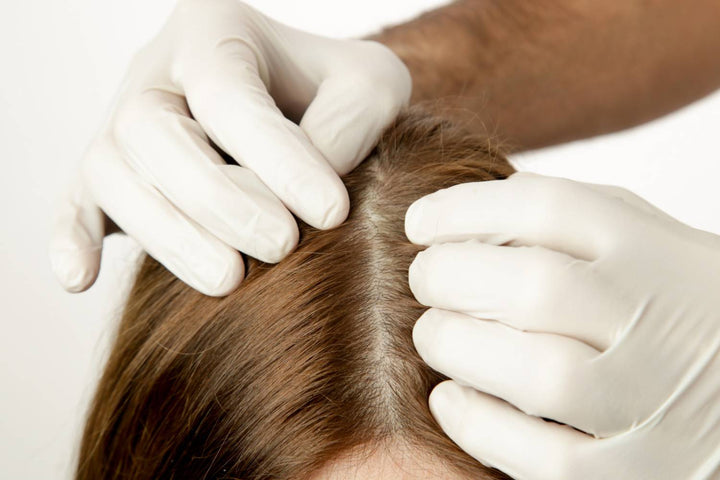
Avoid scrubbing skin that is painful, sunburned, bleeding, infected, or covered by open sores. People with psoriasis, eczema, seborrheic dermatitis, folliculitis, or a known contact allergy should ask a dermatologist before adding an exfoliant. A scrub can remove loose scale while still aggravating the underlying condition.
Stop if you develop burning, persistent redness, swelling, increased itching, or shedding associated with inflamed skin. Those are signals to simplify the routine and seek an accurate diagnosis.
A gentler approach
- Wet the scalp and separate the hair into sections.
- Apply the product to the scalp, not the full hair length.
- Massage with the pads of the fingers. Do not use fingernails.
- Follow the label's contact time and frequency.
- Rinse completely, then condition the hair lengths.
- Wait to see how the scalp responds before repeating.
If your main concern is oil, first review the causes and cleansing options in our guide to an oily scalp. If repeated dry shampoo use is creating residue, read whether dry shampoo can be bad for hair and scalp.
Physical scrub or salicylic acid?
Physical scrubs provide immediate friction, which is also why they can be easy to overuse. Large or sharp particles may be difficult to distribute through dense hair. A soft silicone scalp brush can still irritate skin if pressed hard.
Salicylic acid is a keratolytic ingredient used in some dandruff and scalp products to help remove scale. It can also cause dryness or irritation. Use only as directed and do not stack multiple exfoliating products at once. If you use a medicated shampoo, give it the contact time stated on the label.
Scalp health and hair growth
Healthy hair growth depends on functioning follicles, overall health, and adequate nutrition. Keeping the scalp clean and treating disease is useful, but exfoliation does not override genetics, hormones, autoimmune conditions, medication effects, or nutrient deficiency. Patchy loss, scarring, pus, severe tenderness, or rapidly increasing shedding should be evaluated promptly.
Noophoric Hair+ combines vitamins, minerals, botanicals, and amino acids to support fuller, stronger, healthier-looking hair. It is not a treatment for scalp disease.
Further reading
- Tea Tree Oil for Hair and Scalp: Evidence, Dilution, and Allergy
- Baking Soda on Hair: Why High pH Can Cause Damage
Sources
This article is educational and is not a substitute for individualized medical advice.
The information on noophoric.com is for informational and educational purposes only and is not intended to be medical advice. Readers should consult with a qualified healthcare professional before making changes to diet, nutrition, supplementation, medication, or lifestyle.