
Ferritin and Hair Loss: Testing, Iron Deficiency, and Treatment

Ferritin is a protein that stores iron and is commonly measured to estimate iron reserves. Low ferritin can support a diagnosis of iron deficiency and may contribute to diffuse shedding in some people. It is not the only hair-loss test, and there is no universally agreed “perfect ferritin for hair” that applies to every patient.
Ferritin versus hemoglobin
Hemoglobin measures the oxygen-carrying protein in red blood cells. Ferritin reflects stored iron. Iron stores can fall before hemoglobin reaches the threshold for anemia, so a normal blood count does not always rule out iron deficiency. Interpretation should include symptoms, other iron studies, inflammation, and the laboratory range.
Why ferritin can be misleading
Ferritin is also an acute-phase reactant, which means infection, inflammation, liver disease, and other conditions can raise it. A value that appears normal or high may not always reflect abundant usable iron. Clinicians may use transferrin saturation, serum iron, total iron-binding capacity, C-reactive protein, or other testing when the picture is unclear.
The cutoff controversy
Hair-loss studies use different ferritin thresholds, often ranging from clear deficiency to higher proposed targets. Reviews note ongoing disagreement about the level required for hair recovery. A number from an online forum should not override the complete clinical picture or lead to indefinite high-dose supplementation.
Which hair-loss pattern fits iron deficiency?
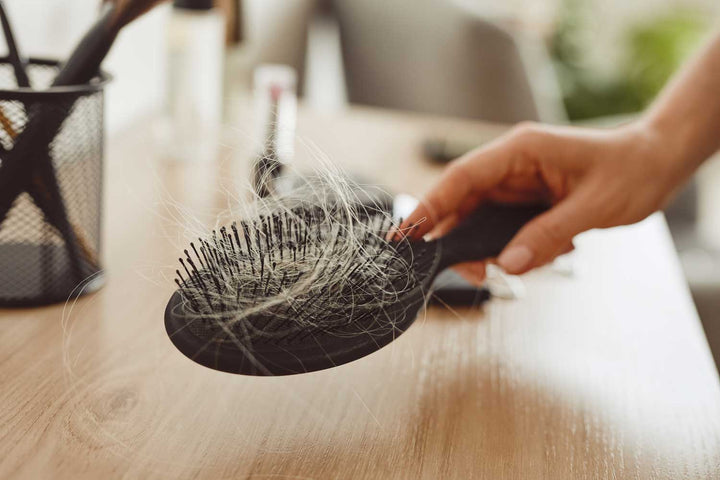
Iron deficiency is most often discussed with diffuse nonscarring shedding such as telogen effluvium. It does not usually explain a smooth round patch, a receding frontal band, pustules, or shiny scarred skin. Pattern hair loss and iron deficiency can coexist.
See how to evaluate excessive hair shedding for other triggers that belong on the timeline.
Who is at higher risk?
- Heavy menstrual bleeding
- Pregnancy or recent childbirth
- Frequent blood donation
- Gastrointestinal blood loss
- Malabsorption conditions or bariatric surgery
- Restrictive diets with low iron intake
- Endurance training combined with inadequate intake
In men and postmenopausal women, iron deficiency raises particular concern for gastrointestinal blood loss. The cause should be investigated rather than treated only with a supplement.
Iron treatment
Treatment depends on severity, symptoms, cause, tolerance, and absorption. A clinician may recommend oral iron, a specific schedule, or intravenous iron in selected cases. Follow-up testing confirms whether stores are improving. More is not better because excess iron can damage organs.
Taking oral iron correctly
Different forms contain different amounts of elemental iron. Food, calcium, antacids, and some medications can affect absorption. Iron commonly causes nausea, constipation, abdominal discomfort, or dark stool. Ask the prescriber how to time it and what to do if side effects make adherence difficult.
How long until hair improves?
Blood values can improve before visible density. Shedding may take months to slow, and new hair grows gradually. Continued blood loss, another deficiency, thyroid disease, pattern hair loss, or an ongoing stressor can delay recovery. Monthly photographs are more useful than daily strand counts.
Lysine and iron
Small studies have examined L-lysine alongside iron in selected women, but the evidence does not support self-treating without a diagnosis. Read L-lysine, iron, and hair evidence for the limits of those findings.
When to seek prompt care
Get medical attention for chest pain, fainting, severe weakness, shortness of breath, rapid heartbeat, black tarry stool, blood in stool, vomiting blood, or very heavy bleeding. Iron tablets are dangerous to children and must be stored securely.
Noophoric Hair+ combines vitamins, minerals, botanicals, and amino acids to support fuller, stronger, healthier-looking hair. It does not replace testing or treatment of iron deficiency.
Further reading
Sources
This article is educational and is not a substitute for individualized medical advice.
The information on noophoric.com is for informational and educational purposes only and is not intended to be medical advice. Readers should consult with a qualified healthcare professional before making changes to diet, nutrition, supplementation, medication, or lifestyle.