
Grapeseed Oil for Hair: Lightweight Conditioning and Safe Use

Grapeseed oil is a lightweight plant oil rich in linoleic acid. Applied sparingly, it can reduce friction, add shine, and smooth dry or frizzy ends. It is not a proven treatment for hair loss and cannot permanently repair a damaged strand.
Its relatively light feel makes it popular for fine, wavy, or low-density hair that becomes greasy with heavier oils.
What grapeseed oil does
Oil forms a film on the hair surface, improving lubrication and reducing contact between rough fibers. This can lower combing force and make hair look smoother. Antioxidant compounds in an oil do not automatically translate into clinical hair-growth effects.
Who may benefit?
- Fine or medium hair needing a light finishing oil
- Dry ends that tangle easily
- Wavy or curly hair needing reduced surface frizz
- People who dislike the weight of coconut or castor oil
Very coarse or highly porous hair may need a richer cream or conditioner underneath. Oil alone does not supply the water and cationic conditioning agents found in a complete conditioner.
How to use it
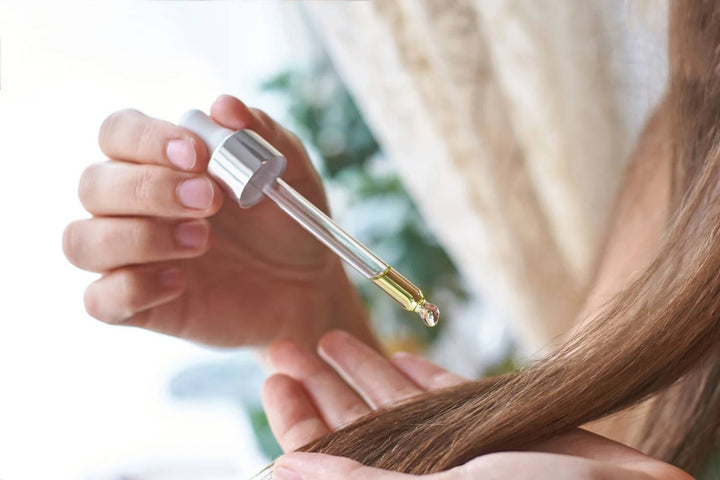
Finishing: Apply one or two drops to dry ends after styling.
Pre-shampoo: Smooth a small amount over the lengths for 20 to 60 minutes, then cleanse and condition.
For curls: Apply over a leave-in to selected sections. Avoid raking a large amount through dry tangles.
For scalp: Patch test and use cautiously. An oily or dandruff-prone scalp may become more coated.
Does grapeseed oil grow hair?
There are not high-quality human trials showing that topical grapeseed oil regrows hair in androgenetic alopecia or alopecia areata. Some laboratory research on components such as procyanidins is not the same as demonstrating that kitchen or cosmetic oil reaches follicles in an effective dose.
If shedding or thinning is present, review medical causes of hair loss rather than delaying evaluation.
Grapeseed oil versus avocado oil
Grapeseed oil usually feels lighter and contains more linoleic acid. Avocado oil is richer in oleic acid and may feel heavier. Neither is universally superior. Choose based on slip, buildup, fragrance, and hair density.
See our guide to avocado oil for hair for a direct comparison.
Can it be used as heat protectant?
Do not rely on plain oil as the only heat protectant. A cosmetic heat-protection product is formulated to spread evenly and reduce specific forms of thermal damage. Oil does not make high temperatures safe and may distribute unevenly.
Buildup and washing
Even a light oil can accumulate when reapplied daily. Reduce use if hair looks stringy, loses volume, or takes longer to become wet. Shampoo thoroughly and condition the lengths. Clarify only when needed.
Allergy and product quality
Use a cosmetic-grade product with clear ingredients and storage instructions. Patch test if you have sensitive skin or grape allergy. Fragrance and preservatives in finished serums may cause reactions even when the base oil is tolerated.
A practical amount
Start with one drop for short or fine hair and two to four drops for long or dense hair. Warm it between the palms, apply to the ends first, and wait before adding more. The correct amount leaves hair flexible, not separated into oily strands.
What to expect over time
Surface softness should be noticeable the same day. Claims that new growth will become thicker after a few weeks are not a realistic test of the oil. Photograph density monthly if hair loss is a concern, and keep cleansing and styling consistent so product shine is not mistaken for biological regrowth.
Noophoric Hair+ combines vitamins, minerals, botanicals, and amino acids to support fuller, stronger, healthier-looking hair.
Further reading
Sources
This article is educational and is not a substitute for individualized medical advice.

The information on noophoric.com is for informational and educational purposes only and is not intended to be medical advice. Readers should consult with a qualified healthcare professional before making changes to diet, nutrition, supplementation, medication, or lifestyle.