
Coarse Hair Care: Cleansing, Conditioning, Heat, and Styling

Coarse hair has a larger individual strand diameter. It can be straight, wavy, curly, or coily, and it is not the same as having a lot of hair. Someone can have coarse strands with low density or fine strands with very high density.
Because coarse fibers often feel substantial and resist bending, the main care goals are lubrication, controlled cleansing, gentle detangling, and heat management. The routine should still be adjusted for scalp oil, porosity, chemical processing, and curl pattern.
How to tell if hair is coarse
A coarse strand is usually easy to feel between the fingers and looks wider than a fine strand. It may hold shape well but feel wiry when dry. Diameter is partly genetic and does not indicate whether the strand is healthy.
Do not rely on the floating strand porosity test. Surface oil, product residue, water tension, and strand shape can change whether a hair floats. Your processing history, drying time, and response to conditioner are more useful.
Clean the scalp, not every inch aggressively
Shampoo as often as needed to keep the scalp comfortable and clean. Apply cleanser to the scalp, massage with fingertips, and let the lather rinse through the lengths. Coarse hair may tolerate less frequent cleansing, but an oily or dandruff-prone scalp still needs adequate shampooing.
Co-washing can help between shampoos for some textures, but it may not remove heavy waxes, silicones, oils, or scalp scale. Read the benefits and limits of co-washing hair before eliminating shampoo.
Condition for slip
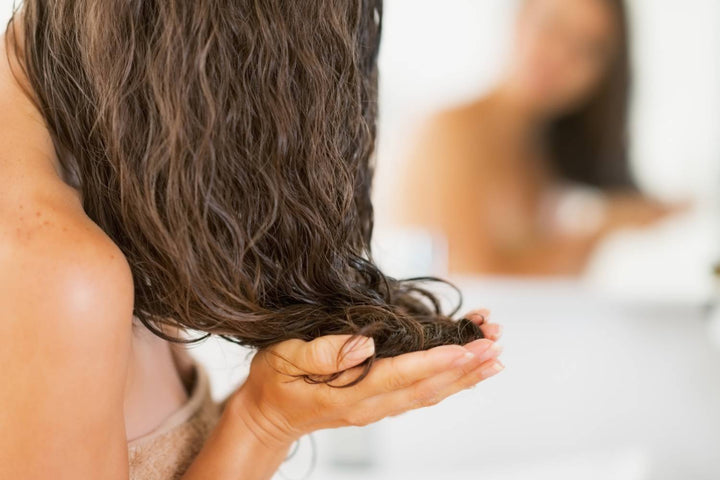
Use rinse-out conditioner after shampoo, concentrating on the lengths and ends. Divide dense hair into sections so the product reaches every area. Detangle while the hair is saturated and slippery, working from the ends upward.
A weekly or occasional deep conditioner may help if the hair is very dry or chemically treated. More product is not always more effective. If hair feels coated, takes much longer to dry, or loses movement, reduce the amount or clarify periodically.
Layer leave-in products carefully
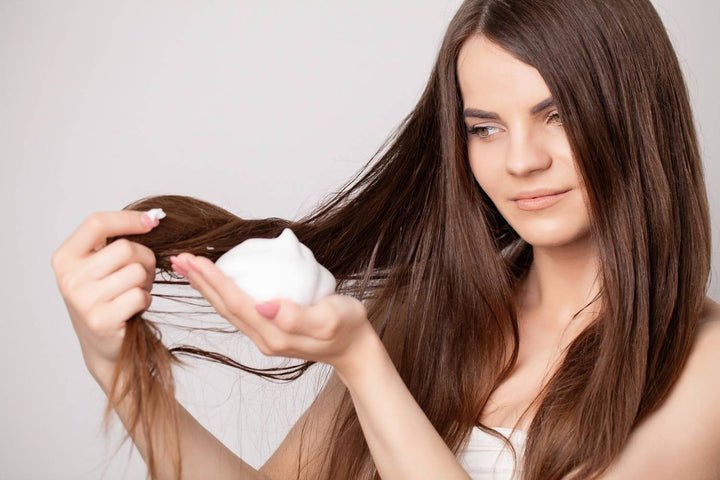
A leave-in conditioner can provide continued lubrication. Oil or cream can add softness and reduce the appearance of frizz. Apply one layer at a time and judge the result after hair dries. The LOC method is one option, not a requirement for every coarse texture.
Keep rich products off an oily scalp. They belong mainly on the weathered lengths unless the label specifically says otherwise.
Drying and heat
Blot with a microfiber towel or soft shirt rather than rubbing. Air-drying avoids thermal exposure, but leaving very dense hair wet for many hours can be inconvenient and may aggravate some scalp conditions. A diffuser or dryer on low to medium heat is a reasonable alternative.
Flat irons and curling irons concentrate high heat on the fiber. Use the lowest effective temperature, work on fully dry hair, limit passes, and use a heat protectant. Learn the full routine for preventing heat damage.
Night care and protective styles
A satin or silk bonnet, scarf, or smooth pillowcase can reduce friction. Loose braids or twists may prevent tangles, but the style should not hurt or pull the hairline. Protective styles are only protective when installed and removed gently.
Common coarse hair mistakes
- Assuming coarse hair cannot be damaged
- Using very high heat because the strand feels strong
- Skipping conditioner to create more volume
- Layering several heavy butters at the scalp
- Detangling dry curls with force
- Wearing tight styles continuously
When texture changes suddenly
Hair can become rough from bleach, permanent color, sun, heat, mineral deposits, and aging. A sudden change accompanied by shedding, scalp inflammation, or other health symptoms deserves evaluation. Cosmetic care cannot diagnose thyroid disease, anemia, or other medical causes.
Noophoric Hair+ combines vitamins, minerals, botanicals, and amino acids to support fuller, stronger, healthier-looking hair.
Further reading
Sources
This article is educational and is not a substitute for individualized medical advice.

The information on noophoric.com is for informational and educational purposes only and is not intended to be medical advice. Readers should consult with a qualified healthcare professional before making changes to diet, nutrition, supplementation, medication, or lifestyle.