
How to Make Hair Look Thicker: Density, Diameter, and Styling

Hair looks thicker when more strands are visible, each strand has more apparent diameter, and styling creates lift without breakage. You can improve the appearance quickly with the right cut and products, while changes in true density require identifying the cause of thinning and allowing months for growth.
Density, diameter, and volume are different
- Density: the number of hairs growing in an area of scalp.
- Diameter: the thickness of each individual fiber.
- Volume: the visual space and lift created by texture, cut, and styling.
A person can have fine strands with high density or coarse strands with low density. The best strategy depends on which feature creates the concern.
Start with the haircut
Blunt ends can make fine hair look fuller because more strands finish at the same line. Long, aggressive layers may remove visual weight, while strategic shorter layers can create lift. A stylist can balance shape with the amount and curl pattern of your hair.
Regular trims remove thin, split, transparent ends. Trimming does not change the follicles, but it can make the remaining length appear denser.
Use lightweight cleansing and conditioning
Buildup can collapse volume, especially on fine or low-porosity hair. Shampoo according to scalp oil and product use. Apply conditioner mainly to mid-lengths and ends rather than coating the roots heavily.
If hair feels coated or limp, use a clarifying shampoo occasionally. Do not over-clarify, because dryness and breakage make the ends look thinner.
Choose styling products by function
- Mousse or foam: adds lightweight body and root lift.
- Volumizing spray: supports lift without heavy oil.
- Texture spray: creates separation but may feel drying.
- Dry shampoo: absorbs oil and adds grip between washes.
- Thickening cream: coats fibers to increase apparent diameter.
- Hair fibers: temporarily reduce visible scalp in thinning areas.
Start with less product than you think you need. Heavy oils, butters, and silicones can flatten fine hair even when they improve shine and slip.
Blow-dry for lift with less damage
Apply heat protectant, use low or medium heat, and lift the roots with fingers or a round brush. Direct airflow down the shaft to reduce frizz. Stop when hair is dry rather than continuing to overheat it.
Changing the part or using rollers while hair cools can create volume without repeated high-heat passes.
Protect against breakage
Hair can look thin because damaged ends keep snapping. Condition every wash, detangle gently, loosen tight styles, space chemical services, and avoid overlapping bleach.
Read our guide to hair breakage causes and prevention if the lengths are uneven or frayed.
Support new hair from within
Hair follicles need adequate calories, protein, iron, zinc, vitamin D, and other nutrients. Deficiencies can contribute to shedding, while taking excessive amounts when status is sufficient does not guarantee extra density.
Noophoric Hair+ combines vitamins, minerals, botanicals, and amino acids, including biotin, zinc, and saw palmetto, to support fuller, stronger, healthier-looking hair.* It is designed as an inside-out complement to gentle care and styling.
Know when the issue is true thinning
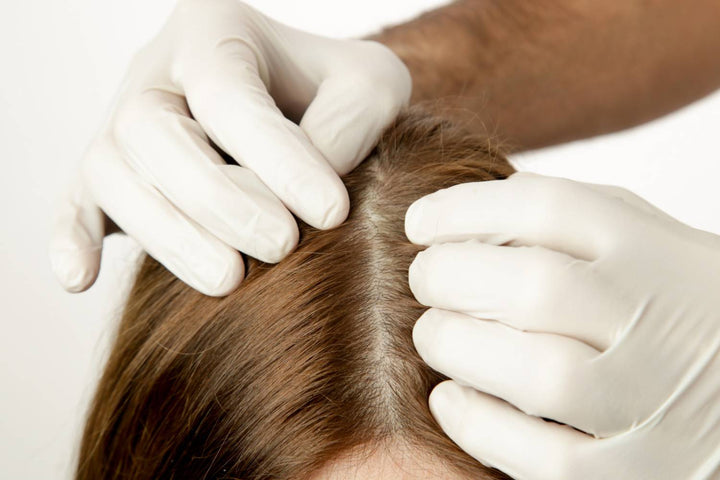
A widening part, receding hairline, smaller ponytail, expanding bald spot, or visible scalp under normal lighting can signal hair loss rather than styling difficulty. Sudden heavy shedding often begins two to three months after illness, fever, surgery, childbirth, major stress, or rapid weight loss.
A dermatologist can distinguish pattern hair loss, telogen effluvium, alopecia areata, traction, scalp disease, and breakage. Treatment works best when matched to the cause.
Evidence-based density treatments
Topical minoxidil can help many people with pattern hair loss and some other conditions when used consistently. Prescription options differ for men and women and require discussion of side effects, pregnancy potential, and health history.
Procedures such as platelet-rich plasma or transplantation may be considered in selected patients. Cosmetic fibers and scalp micropigmentation improve appearance without changing follicle count.
A quick volume routine
- Shampoo the scalp thoroughly.
- Apply lightweight conditioner below the roots.
- Blot gently and add mousse at the roots.
- Blow-dry on moderate heat while lifting away from the scalp.
- Set with a light spray rather than a heavy wax.
- Use a small amount of dry shampoo on later days if oil collapses volume.
Frequently asked questions
Can fine hair become coarse?
Natural diameter is largely genetic. Coating products can temporarily increase apparent thickness, while treatment may reverse miniaturization in some types of hair loss.
Does cutting hair short make it thicker?
It does not change follicles, but a blunt shorter shape can make ends look denser and reduce breakage.
Do oils make hair thicker?
Oils reduce friction and add shine but can flatten fine hair. They do not increase follicle number.
How long does real density improvement take?
Hair grows slowly. Cause-specific treatment usually requires at least three to six months to judge, with continued use needed for many conditions.
Bottom line
For immediate thickness, optimize the cut, remove buildup, use lightweight volumizers, and style for root lift. For lasting density, prevent breakage, support nutrition, and identify any true hair-loss condition early. Cosmetic and medical solutions can work together.
Further reading
Sources
- American Academy of Dermatology. Hair-loss signs and symptoms.
- American Academy of Dermatology. Tips for managing hair loss.
Evidence reviewed August 2026. This article is educational and is not a substitute for individualized medical diagnosis or treatment. *These statements have not been evaluated by the Food and Drug Administration. Noophoric products are not intended to diagnose, treat, cure, or prevent any disease.
The information on noophoric.com is for informational and educational purposes only and is not intended to be medical advice. Readers should consult with a qualified healthcare professional before making changes to diet, nutrition, supplementation, medication, or lifestyle.