
How to Detangle Hair With Less Pain and Breakage

The safest way to detangle hair is to add slip, work in sections, start at the ends, and use the least force possible. Ripping a brush from roots to ends concentrates stress at knots and can cause breakage, split ends, and unnecessary scalp pain.
Why hair tangles
Raised or damaged cuticle scales catch on neighboring fibers. Curl pattern, length, dryness, weathering, bleach, heat, friction, shed hairs, and product residue all increase knotting.
Curly and tightly coiled hair has more contact points and can be fragile where the fiber bends. Fine hair may form small tight knots. Long and bleached hair accumulates more weathering at the ends.
Wet or dry detangling?
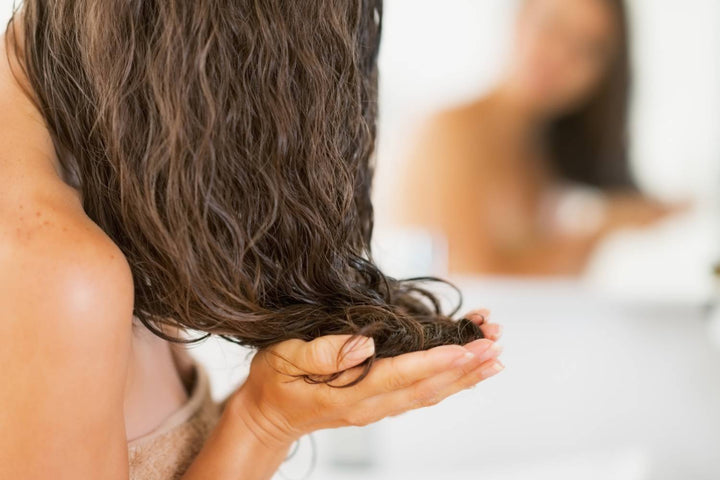
Water makes hair swell and can reduce some strength, so soaking wet hair is vulnerable to force. Conditioner adds lubrication that lowers combing friction. Many curly and coily hair types detangle best while wet and saturated with conditioner.
Straight or fine hair may do better after towel blotting, using a light detangling spray, and starting when damp. There is no single rule for every texture. Choose the condition that provides the most slip with the least stretching and snapping.
Step-by-step detangling
- Divide hair into manageable sections.
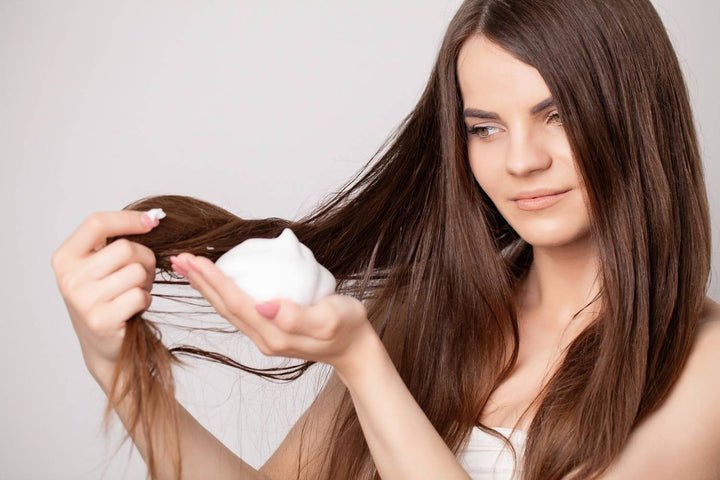
- Apply conditioner, leave-in product, or detangler for slip.
- Hold the section above the knot to reduce pulling on the scalp.
- Loosen large knots with fingers first.
- Start at the ends and move upward a few inches at a time.
- Use a wide-tooth comb or flexible brush suited to your texture.
- Stop and add more slip when resistance rises.
How to handle a tight knot
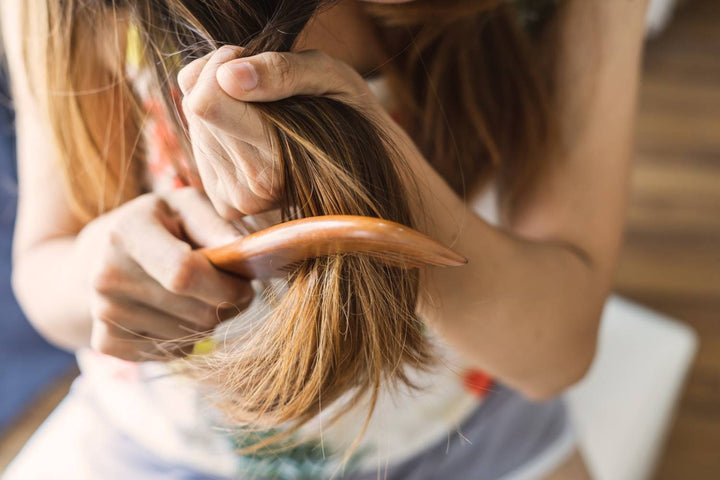
Do not yank. Saturate the knot with conditioner or detangling product, then separate the outer hairs gradually with fingers or the pointed end of a comb. Work from the edge toward the center.
If a knot is fused, matted, or close to the scalp, a stylist may be able to release it with less loss. Cutting straight through the center can remove more length than necessary.
Tools that help
- Fingers for feeling tension and separating large knots
- A seamless wide-tooth comb
- A flexible detangling brush
- Sectioning clips without sharp edges
- A spray bottle for re-wetting curly or coily sections
Inspect brushes and combs for cracked seams or missing tips that can snag the cuticle.
Products that reduce friction
Conditioners use cationic ingredients, fatty alcohols, silicones, oils, polymers, and proteins to improve slip. The best product leaves enough lubrication without coating the hair excessively.
Silicones can be especially helpful for damaged hair because they reduce friction. Silicone-free products can also detangle well when formulated with effective alternative conditioners.
Preventing future tangles
- Condition after shampooing.
- Dry with a soft towel or T-shirt without rough rubbing.
- Sleep on a smooth pillowcase or protect long hair loosely.
- Use a braid or loose protective style for wind and exercise.
- Trim severely split ends.
- Limit bleach, high heat, and tight styles.
- Detangle regularly before small knots become mats.
Detangling by texture
Straight or fine hair: use a light product and smaller tool to avoid flatness. Wavy hair: detangle with conditioner and minimize dry brushing if it causes frizz. Curly or coily hair: work in more sections with generous slip and keep finished sections separated.
Our hair-texture guide explains diameter, curl pattern, density, and porosity so you can adjust technique.
When tangling signals damage
A sudden increase in knots, white dots, split ends, or short pieces can indicate weathering or chemical damage. Review our guide to hair breakage causes and prevention. Persistent matting with scalp disease, pain, or unexplained loss deserves professional evaluation.
Support stronger-looking hair
Gentle detangling preserves the strands you already have. Noophoric Hair+ combines vitamins, minerals, botanicals, and amino acids to support fuller, stronger, healthier-looking hair.*
Frequently asked questions
Should I brush hair from the roots or ends?
Begin at the ends and move upward. Starting at the roots pushes several knots together and concentrates force at the weakest point.
Is a wide-tooth comb always best?
It is a useful starting tool, but flexible brushes and finger detangling may work better for some textures. The best tool glides with the least force and does not have rough seams.
Bottom line
Detangle slowly with slip, sections, and low force. Start at the ends, support the hair above each knot, and match wet or dry technique to your texture. Prevention through conditioning and reduced friction is easier than removing severe mats.
Further reading
Sources
- Hair cosmetics: an overview. 2015.
- Hair cosmetics for the hair loss patient. 2021.
- Hair-care physicochemistry: structure and degradation. 2023.
Evidence reviewed August 2026. This article is educational and is not a substitute for individualized medical diagnosis or treatment. *These statements have not been evaluated by the Food and Drug Administration. Noophoric products are not intended to diagnose, treat, cure, or prevent any disease.
The information on noophoric.com is for informational and educational purposes only and is not intended to be medical advice. Readers should consult with a qualified healthcare professional before making changes to diet, nutrition, supplementation, medication, or lifestyle.