
Is Baldness Genetic? How Inheritance and Hormones Affect Hair

Most male pattern baldness and much female pattern hair loss are strongly influenced by genetics, but inheritance is not controlled by one “baldness gene” from the mother's side. Many genetic variants from both parents interact with age, hormones, follicle sensitivity, and health.
What genetic hair loss is
Androgenetic alopecia causes susceptible scalp follicles to miniaturize over repeated growth cycles. Each new hair becomes shorter, finer, and less pigmented until the scalp is increasingly visible.
In men, it commonly affects the temples, frontal hairline, and crown. In women, it more often causes diffuse thinning across the central scalp and a widening part while the frontal hairline is relatively preserved.
Is baldness inherited from the mother's father?
This popular rule is incomplete. The androgen-receptor gene is on the X chromosome, which a man receives from his mother, and variants in that region can influence risk. Many other risk variants are located on non-sex chromosomes and can come from either parent.
Look at the full family history, including men and women on both sides. Even then, genetics predicts probability rather than an exact age or final pattern.
Why DHT matters
Testosterone can be converted to dihydrotestosterone by 5-alpha-reductase. In genetically susceptible scalp follicles, DHT signaling shortens the growth phase and promotes miniaturization.
This does not mean a man with pattern hair loss necessarily has abnormally high blood testosterone or DHT. Local follicle sensitivity and enzyme activity matter.
Early signs
- Gradual temple recession
- An M-shaped hairline
- Crown thinning
- A widening central part
- Reduced ponytail circumference
- Short, fine hairs in areas that were previously dense
Take monthly photos under consistent lighting. Early treatment generally preserves more hair than waiting for advanced smooth baldness.
How it is diagnosed
A dermatologist reviews the pattern, family history, timeline, scalp, medications, and recent triggers. Magnification can reveal variation in hair diameter and miniaturization.
Blood tests or a biopsy may be needed when shedding is sudden, the pattern is unusual, the scalp is inflamed, or more than one cause may be present.
Can genetic hair loss be prevented?
You cannot change inherited susceptibility, but early treatment can slow progression and maintain or improve density. Avoiding traction and breakage also preserves the visible hair you have.
Treatment options for men
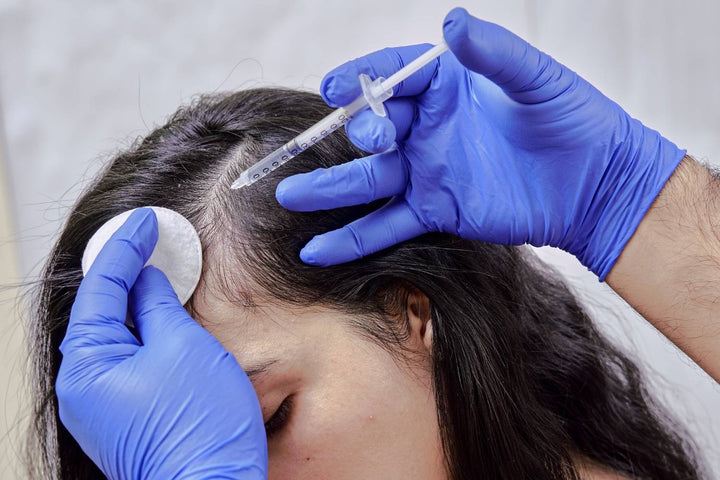
Topical minoxidil can stimulate growth and help maintain hair. Prescription finasteride reduces DHT and slows further loss in many men. Dermatologists may discuss oral minoxidil, dutasteride, PRP, low-level light, or transplantation for selected patients.
Review sexual, mood, fertility, cardiovascular, and other risks before prescription treatment. Our guide to hair-loss treatments by cause compares the options.
Treatment options for women
Topical minoxidil is commonly used. Depending on age, pregnancy potential, health, and diagnosis, a dermatologist may discuss spironolactone, oral minoxidil, or other prescription approaches.
Pregnancy and breastfeeding considerations are essential for medication choice.
Does lifestyle matter if loss is genetic?
Yes, but it does not erase inherited sensitivity. Adequate calories, protein, iron, zinc, vitamin D, sleep, and gentle hair care support follicles and prevent additional shedding or breakage.
Rapid weight loss, illness, stress, thyroid disease, and nutrient deficiency can add telogen effluvium on top of pattern loss. Treating those factors can improve the non-genetic portion.
Where Hair+ fits
A comprehensive hair formula can support nutrient adequacy and provide botanical and amino-acid support as one part of the routine. Pattern hair loss often benefits from direct medical treatment as well.
Noophoric Hair+ combines vitamins, minerals, botanicals, and amino acids, including biotin, zinc, and saw palmetto, to support fuller, stronger, healthier-looking hair.*
Hair transplant and genetics
Transplants move relatively resistant donor follicles to thinning areas. The surrounding native hair can continue to miniaturize, so long-term planning and medical maintenance are important.
Frequently asked questions
If my father is bald, will I be bald?
Your risk may be higher, but the pattern, age of onset, and severity are not guaranteed. Many genes from both sides contribute.
Can genetic testing predict baldness?
Consumer tests estimate risk but cannot predict the exact timeline or treatment response. A scalp exam and family history are more actionable.
Does wearing a hat cause genetic hair loss?
No. A normal hat does not cause androgenetic alopecia. Chronic traction or friction from tight equipment can damage hair in localized areas.
Can genetic hair loss start in the teens?
Yes. It can begin after puberty. Early-onset change deserves confirmation because other conditions can mimic it.
Bottom line
Pattern hair loss is polygenic and can come from both sides of the family. DHT sensitivity miniaturizes susceptible follicles even when blood hormone levels are normal. Early diagnosis, evidence-based treatment, complete nutrition, and gentle care offer the best chance of preserving density.
Further reading
Sources
- American Academy of Dermatology. Finding treatments for genetic hair loss.
- American Academy of Dermatology. Male pattern hair loss and treatment.
Evidence reviewed August 2026. This article is educational and is not a substitute for individualized medical diagnosis or treatment. *These statements have not been evaluated by the Food and Drug Administration. Noophoric products are not intended to diagnose, treat, cure, or prevent any disease.


The information on noophoric.com is for informational and educational purposes only and is not intended to be medical advice. Readers should consult with a qualified healthcare professional before making changes to diet, nutrition, supplementation, medication, or lifestyle.