
Menopause Hair Loss: Causes, Patterns, and What Helps

Hair loss around menopause is common, but menopause is not the only possible cause. Lower estrogen, age-related follicle changes, inherited female pattern hair loss, stress, thyroid disease, low iron, and medication changes can all contribute. The pattern and timing of the thinning help determine what to do next.
Some women notice a wider part, a smaller ponytail, or more visible scalp. Others experience a sudden increase in shedding a few months after a stressful event. Those are not always the same problem, and they may need different treatment.
Why can hair thin during menopause?
Hair follicles cycle through growth, transition, rest, and shedding. Estrogen helps influence that cycle, although the relationship is complex. During perimenopause and menopause, estrogen and progesterone decline while the relative influence of androgens can become more noticeable. In genetically susceptible follicles, this can contribute to gradual miniaturization and female pattern hair loss.
Age matters too. Hair growth tends to slow over time, individual strands may become finer, and fewer follicles may remain in active growth. Menopause often arrives during the same years when these age-related changes become easier to see.
That does not mean every case of midlife thinning is caused by hormones. A sudden shed can follow illness, surgery, major stress, rapid weight loss, or a medication change. Low iron stores and thyroid disease can also contribute. Our guide to thyroid disease and hair loss explains when thyroid symptoms deserve attention.
What menopause hair loss usually looks like
The most common pattern is gradual thinning across the top and center of the scalp. You may notice:
- A widening center part
- More scalp showing under bright light
- A ponytail that feels smaller
- Shorter, finer hairs in areas that used to look dense
- Slow progression over months or years
This pattern is different from a smooth round patch, a sharply receding band, or a painful and inflamed scalp. Hairline recession with eyebrow loss can be a sign of frontal fibrosing alopecia, a scarring condition seen most often after menopause. Early evaluation matters because scarring hair loss can become permanent.
Pattern loss versus temporary shedding
Female pattern hair loss is usually gradual. Telogen effluvium is more likely to cause increased shedding across the scalp, often two to three months after a trigger. A woman can have both at the same time. Temporary shedding may make previously subtle pattern loss look suddenly worse.
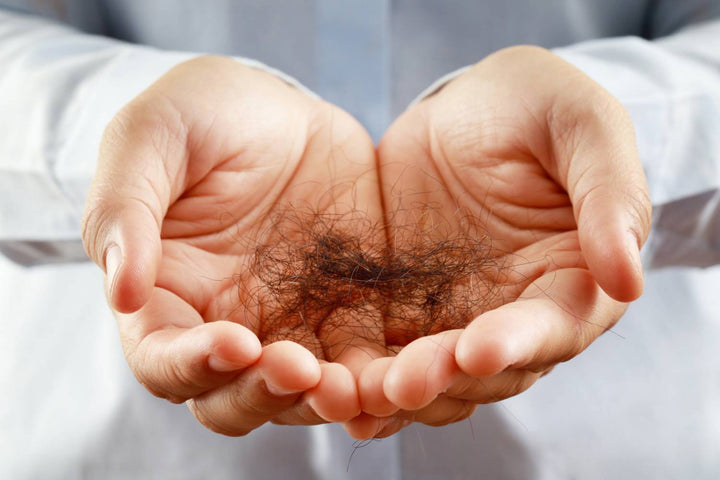
If handfuls of hair are coming out after a fever, surgery, severe stress, or rapid weight loss, read about excessive hair shedding and recovery. A timeline of recent health changes is often more useful than counting every strand.
How a dermatologist evaluates midlife hair loss
A dermatologist will usually ask when the change began, whether shedding is sudden or gradual, where the loss is most visible, and whether there are scalp symptoms. They may examine the scalp with magnification to look for variation in hair diameter, miniaturized hairs, inflammation, scale, or scarring.
Blood testing is targeted to the history. A clinician may consider a complete blood count, ferritin or other iron measures, thyroid testing, or selected nutrient and hormone tests. Testing every possible vitamin without a reason is rarely useful. Our article on ferritin and hair loss explains how iron results fit into the bigger picture.
Treatments that may help
Topical minoxidil
Topical minoxidil is the most commonly recommended first-line treatment for female pattern hair loss. It can reduce progression and help some follicles produce thicker hair. Early temporary shedding can occur during the first several weeks. Results take time, often six to twelve months, and continued use is needed to maintain benefit.
Minoxidil is not appropriate for everyone. Ask a clinician about use during pregnancy or breastfeeding, cardiovascular concerns, scalp irritation, and accidental exposure to children or pets.
Prescription options
A dermatologist may consider spironolactone or other prescription medicines when pattern loss is associated with androgen sensitivity. The choice depends on medical history, blood pressure, kidney function, medications, pregnancy potential, and other factors. These treatments require professional supervision.
Low-level light devices and procedures
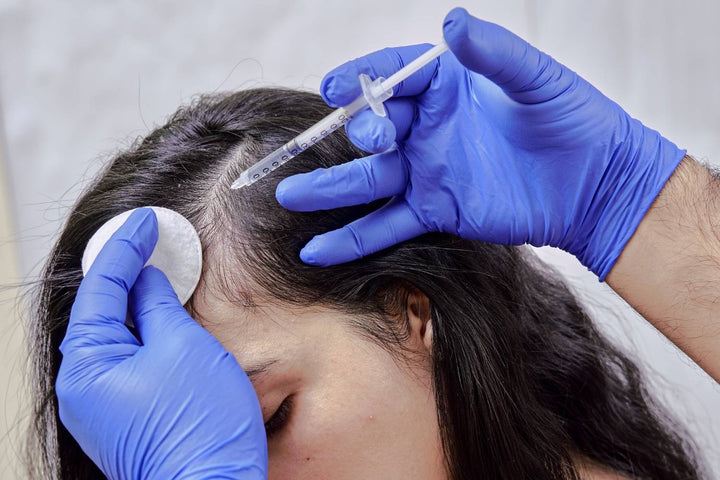
Some home laser devices are cleared for pattern hair loss, and studies suggest modest benefit for some users. Platelet-rich plasma and hair transplantation are other options, but cost, protocol, candidacy, and evidence vary. Compare the main approaches in our guide to hair loss treatments by cause.
Correcting nutrition gaps
Hair follicles need adequate protein, calories, iron, zinc, vitamin D, and other nutrients. Correcting a documented deficiency can support normal growth. Taking more than you need does not make hair grow faster, and excessive vitamin A, selenium, or iron can be harmful.
A balanced hair supplement can be a convenient way to support daily nutrient intake when diet is inconsistent. Noophoric Hair+ is formulated with vitamins, minerals, and other ingredients to support healthy-looking hair and normal hair strength.* It should complement, not replace, an evaluation for persistent or unusual hair loss.
A practical menopause hair routine
- Document the pattern. Take monthly photos in the same lighting with the same part.
- Review the timeline. Note illnesses, surgery, major stress, weight change, new medicines, or hormone changes from the prior six months.
- Protect fragile lengths. Reduce high heat, bleach, tight styles, and rough detangling.
- Eat enough protein and calories. Restrictive dieting can worsen diffuse shedding.
- Use treatment consistently. Hair grows slowly, so judge a reasonable plan over months, not days.
- Seek an early diagnosis. Progressive thinning is generally easier to manage before density is significantly reduced.
When to see a dermatologist promptly
Arrange an evaluation if hair loss is rapid, patchy, painful, itchy, or accompanied by redness, scale, eyebrow loss, scalp shine, or recession around the entire front hairline. Also seek care for fatigue, unexplained weight change, heavy bleeding, or other symptoms that could suggest an underlying condition.
Frequently asked questions
Does hair grow back after menopause?
Hair can improve when a reversible trigger or deficiency is corrected. Female pattern hair loss is progressive, but treatment can help slow loss and improve density for some women. The likely outcome depends on the diagnosis and how early treatment begins.
Is menopause hair loss permanent?
Not always. Temporary telogen effluvium can recover. Pattern hair loss usually requires ongoing management, while scarring alopecia can permanently damage follicles. That is why the pattern matters.
Can hormone therapy stop hair loss?
Menopausal hormone therapy is not prescribed solely as a hair-loss treatment. Its effect on hair is inconsistent, and it has benefits and risks that should be discussed with a menopause specialist. A dermatologist can recommend treatments directed at the type of hair loss.
How long should I wait before judging a treatment?
Most hair treatments need at least several months. Monthly photos are more reliable than daily mirror checks. If loss is accelerating or the scalp is inflamed, do not wait for a routine to work before seeking care.
The bottom line
Menopause can coincide with gradual female pattern hair loss, but sudden shedding, thyroid disease, iron deficiency, medication effects, and scarring conditions can look similar. Identify the pattern first, correct genuine nutrition gaps, protect fragile hair, and discuss evidence-based treatment with a dermatologist.
Sources
- American Academy of Dermatology. Female pattern hair loss.
- American Academy of Dermatology. Frontal fibrosing alopecia.
- American Academy of Dermatology. Hair loss diagnosis and treatment.
- Carmina E, et al. Female Pattern Hair Loss and Androgen Excess. Journal of Clinical Endocrinology and Metabolism. 2019.
Evidence reviewed September 2026. This article is educational and is not a substitute for individualized medical diagnosis or treatment.
*These statements have not been evaluated by the Food and Drug Administration. This product is not intended to diagnose, treat, cure, or prevent any disease.
The information on noophoric.com is for informational and educational purposes only and is not intended to be medical advice. Readers should consult with a qualified healthcare professional before making changes to diet, nutrition, supplementation, medication, or lifestyle.