
Red Light Therapy for Hair Loss: Evidence, Devices, and Results

Low-level red light therapy can modestly improve hair density in some adults with male or female pattern hair loss. It is noninvasive and generally well tolerated, but results vary by device, diagnosis, treatment schedule, and consistency. It is not a proven treatment for every type of shedding.
The terms low-level laser therapy, low-level light therapy, photobiomodulation, red light therapy, laser cap, and laser helmet are often used for related devices. Some use laser diodes, some use light-emitting diodes, and some combine them.
How red light therapy may affect follicles
Hair devices typically deliver red or near-infrared light at low power. Researchers propose that absorbed light may influence cellular energy signaling, oxidative balance, inflammation, and the transition of follicles into active growth. The exact mechanism in human pattern hair loss is not fully established.
The treatment does not burn away tissue like a surgical laser. It also does not create punctures like microneedling.
What the evidence shows
Randomized trials and systematic reviews have generally found increases in hair count or density compared with sham devices in people with androgenetic alopecia. A 2026 systematic review and meta-analysis of lasers and energy-based devices reported benefit from low-level laser therapy, while noting that protocols and outcomes vary.
Most studies are relatively short, use specific devices, and include selected patients. A positive trial for one device does not prove that every red light panel, cap, or comb will produce the same result.
Red light therapy is best viewed as an option for confirmed pattern hair loss. It is not a substitute for identifying thyroid disease, low iron, medication effects, infection, alopecia areata, or scarring alopecia. Review the major diagnoses in our guide to hair loss treatments by cause.
Who may benefit most?
Good candidates generally have mild to moderate male or female pattern hair loss with follicles that are still producing hair. Treatment is less likely to restore areas that have been completely smooth and bald for years.
Someone who wants a non-drug option, cannot tolerate a topical product, or wants to add another evidence-based tool may consider a cleared device. A dermatologist can confirm whether the pattern fits androgenetic alopecia.
How to compare red light devices
Check the exact indication
Look for a device cleared by the U.S. Food and Drug Administration for the relevant type of pattern hair loss. FDA clearance is not the same as a guarantee of regrowth, but it is more meaningful than a vague wellness claim.
Confirm coverage
Caps and helmets can provide broad scalp coverage. Combs require careful, repeated positioning. A panel made for general skin or wellness may not deliver the same wavelength, dose, distance, or coverage as a studied hair device.
Read the schedule before buying
Devices may require sessions several times per week. A technically impressive device will not help if its schedule is too inconvenient to maintain for months.
Look for transparent specifications
Reputable manufacturers should identify device type, intended use, treatment time, safety instructions, warranty, and return policy. Be cautious with claims of guaranteed regrowth or permanent results.
How long do results take?
Expect months rather than weeks. Many studies assess outcomes after four to six months. Some users may need longer to see visible changes, and continued treatment is usually needed to maintain benefit.
Track the center part, temples, and crown with monthly photos in identical lighting. Hair length, styling fibers, wetness, and camera angle can make progress look larger or smaller than it is. Our article on how fast hair grows explains why early changes are easy to miss.
Side effects and safety
Reported side effects are usually mild and may include temporary scalp dryness, itching, tenderness, or headache. Eye protection and photosensitivity warnings should be followed exactly.
Ask a clinician before use if you have a photosensitivity disorder, take a photosensitizing medicine, have suspicious scalp lesions, or have an inflammatory scalp condition. Do not use a device over infection or open wounds unless a clinician specifically advises it.
Red light therapy compared with other treatments
Minoxidil
Minoxidil has a longer clinical history and is commonly recommended for pattern hair loss. It is less expensive to start but can cause scalp irritation and requires continued use. Red light therapy avoids daily topical residue but has a higher upfront cost.
Finasteride and antiandrogens
Prescription medicines target androgen-related pathways and may be more appropriate for some patients. Risks, pregnancy considerations, laboratory needs, and side effects require clinician guidance.
Microneedling
Microneedling creates controlled punctures and has been studied most often with minoxidil. It carries different hygiene and injury risks. Learn more in our guide to microneedling for hair loss.
PRP
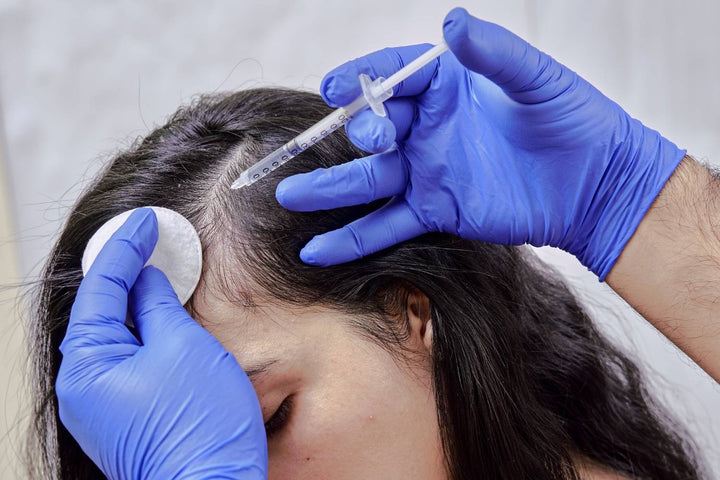
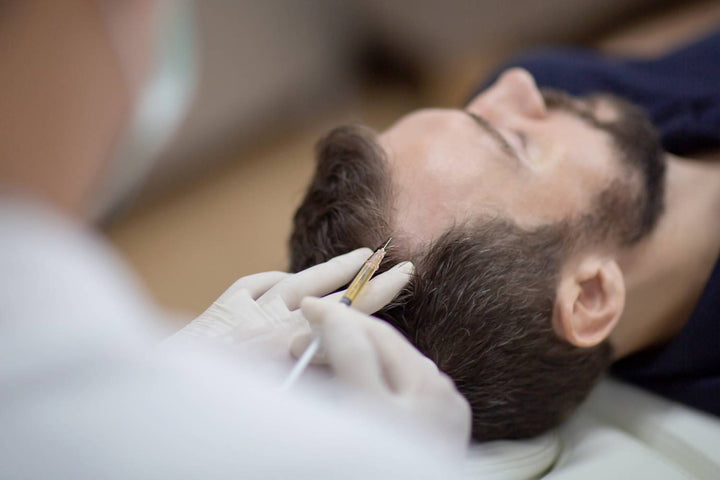
Platelet-rich plasma uses injections prepared from the patient's blood. It is performed in a clinic and usually costs more per treatment. Protocols and results vary.
Can nutrition improve results?
Light treatment cannot compensate for inadequate protein, severe calorie restriction, or a nutrient deficiency. New hair still requires a sufficient nutritional foundation. Test and correct deficiencies when the history supports it, and avoid megadosing vitamins or minerals.
Noophoric Hair+ is designed to support healthy-looking hair and normal hair strength through daily nutrition.* It can complement a broader routine, but it is not a replacement for diagnosis or a medical hair-loss treatment.
Frequently asked questions
Does red light therapy really regrow hair?
Clinical trials suggest a modest improvement in density for some people with pattern hair loss. It does not work for everyone, and it is not proven for all diagnoses.
Is a laser cap better than a laser comb?
A cap may provide easier, more consistent coverage. A comb may cost less but requires careful placement. The evidence for the exact device and the likelihood that you will follow its schedule matter more than the shape alone.
Can red light therapy cause hair shedding?
Some users report temporary changes in shedding, but severe or persistent loss should not be assumed to be a normal response. Review the diagnosis and other triggers with a dermatologist.
Can I combine red light therapy with minoxidil?
Some treatment plans use both. Ask a clinician how to combine them, especially if the scalp is irritated or other procedures are involved.
The bottom line
Red light therapy is a reasonable noninvasive option for selected adults with pattern hair loss. Choose a cleared device with transparent instructions, commit to the schedule for several months, and confirm that another condition is not causing the thinning.
Sources
- Lasers and Energy-Based Devices in Androgenetic Alopecia: Systematic Review and Meta-Analysis. 2026.
- The Effectiveness of Low-Level Light and Laser Therapy on Hair Loss. 2021.
- Safety and Efficacy of Low-Level Laser Therapy for Pattern Hair Loss. 2020.
- American Academy of Dermatology. Female pattern hair loss.
Evidence reviewed September 2026. This article is educational and is not a substitute for individualized medical diagnosis or treatment.
*These statements have not been evaluated by the Food and Drug Administration. This product is not intended to diagnose, treat, cure, or prevent any disease.
The information on noophoric.com is for informational and educational purposes only and is not intended to be medical advice. Readers should consult with a qualified healthcare professional before making changes to diet, nutrition, supplementation, medication, or lifestyle.