
Clinically Studied Ingredients vs. Generic Herbs: What Labels Reveal

Direct answer: A clinically studied branded ingredient can make it easier to match a formula with specific human research because the identity, manufacturing process, marker compounds, and dose are defined. A generic herb is not automatically inferior, but it may be harder to determine whether it is equivalent to the material used in a study. The label and manufacturer documentation should close that gap.
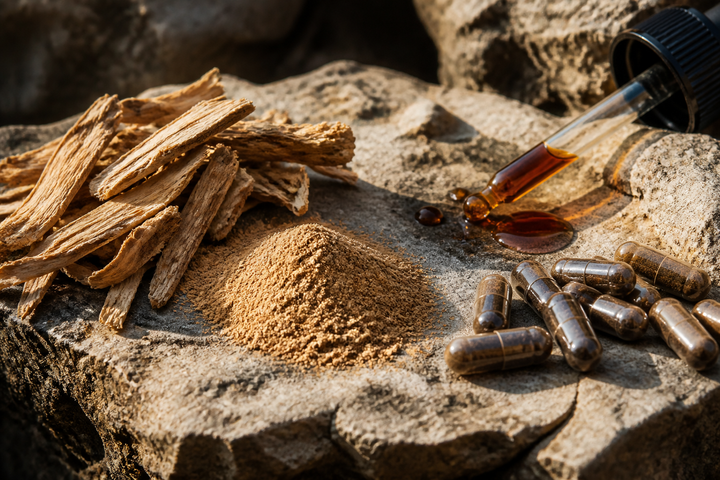
Ingredient sourcing is invisible inside a capsule. Two brown powders can differ in species authenticity, extraction, marker compounds, microbes, heavy metals, solvents, and batch consistency.
Brand names and trademarks are useful only when they point to meaningful specifications, not when they function as decoration.
Key takeaways
- Named extracts improve traceability when the name matches the study.
- Generic ingredients can still be high quality.
- Standardization and identity testing matter more than marketing language.
- The finished daily dose must match the intended evidence.
Why this ingredient is marketed for testosterone
A branded extract is usually supplied under defined manufacturing and testing specifications. Studies can name that exact material, creating a clearer line from research to label.
A generic herb may identify only the common name and milligrams. Without the Latin name, plant part, extraction, or markers, it is difficult to know whether it matches published evidence.
What human studies actually found
Systematic reviews of herbal testosterone-support ingredients show that results vary by extract and population. This is expected because botanicals are chemically complex and manufacturing changes the final profile.
Independent certification can verify label accuracy and screen contaminants, while current good manufacturing practices provide a baseline quality system. Neither replaces outcome research, but both make the product more credible.
What a premium formula should make visible
- Exact ingredient name.
- Botanical species and plant part.
- Named extract or standardization where relevant.
- Daily amount.
- No hidden proprietary blend.
- Manufacturing and quality information.
- Warnings and directions appropriate to the formula.
Evidence limits and product-quality concerns
A trademark does not guarantee that the trial was large, independent, or positive. Read the study design. Generic ingredients also can be tested thoroughly even if the brand name is not printed on the consumer label.
Match the evidence to the exact label
The most useful evidence for clinically studied ingredients vs. generic herbs: what labels reveal matches the ingredient identity, extract, daily dose, population, outcome, and duration. If one of those elements differs, the study may still be relevant, but confidence should be adjusted rather than treated as all-or-nothing.
This is why full label transparency matters. It lets a buyer compare the formula with research, total duplicate nutrients across products, and follow the intended daily serving consistently.
Set expectations that can actually be measured
Choose two or three outcomes before starting, such as morning energy, libido, training performance, sleep quality, or adherence. Review weekly trends rather than asking whether one dose produced a dramatic feeling. Ingredients studied over weeks should be evaluated over a comparable period unless a side effect requires stopping sooner.
Keep the labeled serving, nutrition, training, and sleep reasonably consistent. That creates a fairer evaluation of the formula and makes any medical follow-up easier to interpret.
How to evaluate a supplement more safely
When comparing two formulas, highlight every place the label lets you match identity and daily dose to research. Then compare the full formula, quality controls, directions, and safety rather than choosing on one ingredient alone.
- Do not equate extract ratio with clinical proof.
- Look for human, not only animal, research.
- Check whether the population resembles you.
- Choose transparent manufacturing over exaggerated promises.
Bottom line
Clinically studied ingredients make evidence matching easier. Generic herbs can still be excellent, but they need enough identity and quality information to earn the same confidence.
Frequently asked questions
What is a branded ingredient?
It is an ingredient supplied under a defined trade name, often with specific manufacturing, testing, and research documentation.
Does a trademark mean the product is patented?
No. Trademarks identify commercial source or branding. Patent status is a separate issue.
Can a generic herb work just as well?
Possibly, when species, plant part, extract, marker compounds, dose, and quality are equivalent. The difficulty is proving the match.
Related reading
References
- International Journal of Impotence Research. Evidence review of ingredients in testosterone and erectile dysfunction supplements.
- Medicina. Eurycoma longifolia and testosterone in men: systematic review and meta-analysis.
- NSF. Dietary supplement and vitamin certification.
- FDA. Current Good Manufacturing Practice in Manufacturing, Packaging, Labeling, or Holding Operations for Dietary Supplements.
Evidence reviewed August 2026. This article is educational and is not a substitute for individualized medical diagnosis or treatment.

The information on noophoric.com is for informational and educational purposes only and is not intended to be medical advice. Readers should consult with a qualified healthcare professional before making changes to diet, nutrition, supplementation, medication, or lifestyle.