
Female Pattern Hair Loss: Early Signs, Diagnosis, and Treatment

Female pattern hair loss is the most common cause of progressive hair thinning in women. It usually widens the center part and reduces density over the top of the scalp while leaving the frontal hairline partly intact. Because several other conditions can look similar, an accurate diagnosis matters before treatment begins.
What female pattern hair loss looks like
The medical term is female pattern hair loss, or FPHL. Clinicians may also call it female androgenetic alopecia. Unlike the sharply receding temples often seen in men, women more commonly notice a widening part, a thinner ponytail, more visible scalp under bright light, or reduced volume at the crown. The change is usually gradual.
Dermatologists often describe severity with the Sinclair or Ludwig scale. These systems document how far thinning has progressed, but they do not determine the cause by themselves. Comparing standardized photos every three to six months is often more useful than checking the mirror every day.
Early signs worth noticing
- Your center part appears wider than it did in older photos.
- The scalp is easier to see through dry hair, especially at the crown.
- Your ponytail circumference has gradually decreased.
- Some hairs are finer and shorter than neighboring hairs.
- Thinning is symmetrical rather than confined to one smooth patch.
Those finer hairs reflect hair miniaturization, a process in which susceptible follicles produce progressively narrower strands. Breakage can also create short hairs, so a clinician may use magnification to distinguish the two.
Why it happens
FPHL develops through a combination of inherited follicle sensitivity, age, hormones, and the hair growth cycle. It can begin at almost any adult age but becomes more common after menopause. A family history can raise risk, yet its absence does not rule the condition out.
The condition is not simply proof that a woman has "too much testosterone." Many affected women have normal hormone tests. Testing for androgen excess is more relevant when thinning occurs with irregular periods, new facial hair, severe acne, or other signs of a hormonal disorder. Women with those symptoms may also want to understand the relationship between PCOS and hair loss.
How doctors diagnose it
A dermatologist starts with the pattern and timing of loss, medications, nutrition, recent illness, menstrual history, and family history. A pull test can identify active shedding. Dermoscopy or trichoscopy can reveal variation in shaft diameter and miniaturized hairs. Blood tests may be useful when the history suggests iron deficiency, thyroid disease, anemia, or another contributor.
A scalp biopsy is not routine, but it can clarify an uncertain diagnosis or rule out inflammatory scarring alopecia. Seek prompt evaluation if the scalp is painful, intensely itchy, red, scaly, or developing shiny areas where follicle openings disappear.
Evidence-based treatment options
Topical minoxidil
Topical minoxidil is the best-established first-line medication for many women. It can prolong the growth phase and increase hair diameter. Early shedding may occur during the first weeks as follicles shift cycles. Visible improvement usually requires several months, and benefits generally depend on continued use. Follow the product label and ask a clinician about pregnancy, breastfeeding, heart conditions, or troublesome scalp reactions.
Prescription options
Dermatologists sometimes prescribe oral minoxidil at a low dose or antiandrogen medicines such as spironolactone. These uses require individualized screening and monitoring. They are not appropriate for everyone, and pregnancy prevention is essential with medicines that can affect fetal development.
Procedures and camouflage
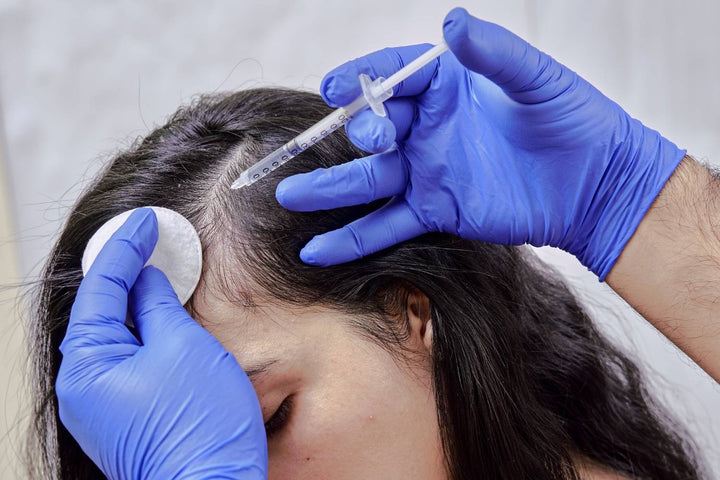
Low-level light devices, platelet-rich plasma, and hair transplantation may help selected patients, although cost, evidence quality, and durability vary. Hair fibers, root powders, strategic cuts, and gentle volumizing products can improve appearance while medical treatment takes effect.
Nutrition and daily hair support
Correcting a documented deficiency can support normal growth, but taking more of a nutrient is not automatically better. Excess vitamin A and selenium can contribute to hair loss. A balanced diet with adequate protein, iron, zinc, vitamin D, and B vitamins is a sensible foundation. If you want a convenient supplement designed for daily nutritional support, Noophoric Hair+ can complement a balanced diet, but it does not diagnose or treat female pattern hair loss.
Protect the hair you have by limiting tight styles, high heat, repeated bleaching, and aggressive brushing. These steps reduce breakage but do not replace treatment for follicle miniaturization. If diet is a concern, use the evidence-based overview of vitamins that support normal hair health rather than guessing from social media.
Frequently asked questions
Can female pattern hair loss grow back?
Many women can improve density or slow progression, particularly when treatment starts early. Complete restoration is less predictable once thinning is advanced.
Does a normal hormone test rule it out?
No. Most women with FPHL do not need to have abnormal androgen levels. The diagnosis is based mainly on the clinical pattern and follicle findings.
How long before treatment works?
Most therapies need at least three to six months before change can be judged, and twelve months may provide a clearer picture. Consistent photos are more reliable than day-to-day impressions.
Bottom line
A widening part and gradual crown thinning are classic clues, but sudden shedding, patchy loss, or scalp symptoms can signal a different condition. Early dermatology evaluation protects time and helps match treatment to the actual diagnosis.
Evidence reviewed September 2026. This article is educational and is not a substitute for individualized medical diagnosis or treatment.
*These statements have not been evaluated by the Food and Drug Administration. This product is not intended to diagnose, treat, cure, or prevent any disease.
Sources
The information on noophoric.com is for informational and educational purposes only and is not intended to be medical advice. Readers should consult with a qualified healthcare professional before making changes to diet, nutrition, supplementation, medication, or lifestyle.