
Hair Miniaturization: Early Signs of Pattern Hair Loss

Hair miniaturization is the gradual shrinking of susceptible follicles in male or female pattern hair loss. The follicle produces a finer, shorter, less pigmented strand during each cycle, which slowly reduces visible density. Early miniaturization can be difficult to see without scalp magnification.
Miniaturization is not the same as temporary shedding or hair-shaft breakage. Recognizing the difference matters because pattern hair loss is progressive and generally responds best when treatment begins early.
What happens during hair miniaturization?
A healthy terminal scalp hair is relatively thick, pigmented, and capable of growing for years. In androgenetic alopecia, genetically susceptible follicles respond to androgen signaling by shortening the growth phase. The follicle becomes smaller and produces progressively finer hair.
Over time, thick terminal hairs are replaced by short, thin, vellus-like hairs. The scalp becomes more visible even if some follicles still contain tiny strands. This process explains why pattern hair loss can look like a loss of density before a clearly bald area forms.
Early signs of miniaturization
- A widening center part
- A receding hairline or deepening temples
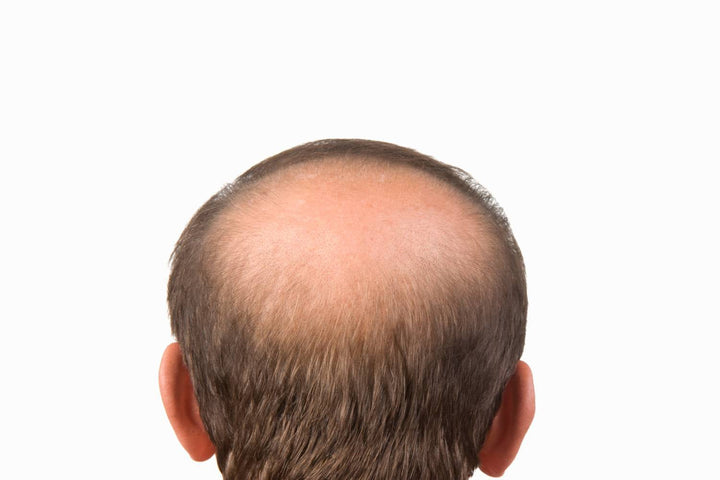
- A growing thin area at the crown
- Short, wispy hairs that do not gain length
- A mix of very fine and thick hairs in the same region
- Greater scalp visibility in bright overhead light
- A smaller ponytail without a dramatic shedding episode
Men often first notice temple recession or crown thinning. Women more often notice widening through the central part and diffuse thinning across the top. Patterns vary, and both sexes can show features outside the typical description.
Miniaturization versus telogen effluvium
Telogen effluvium shifts many follicles into a resting phase after illness, stress, rapid weight loss, childbirth, or another trigger. The result is increased shedding across the scalp. The follicle usually remains capable of producing a normal terminal hair after the trigger resolves.
Miniaturization is a gradual change in the caliber and growth potential of susceptible follicles. Shedding may be normal or only mildly increased. A person can have both conditions at once, and a major shed can reveal underlying pattern loss.
Use our guide to excessive hair shedding to build a timeline of possible triggers.
Miniaturization versus breakage
Broken hairs snap above the scalp because of bleach, heat, friction, tension, or weathering. They may be short, but the follicle can still be producing a thick strand. Miniaturized hairs emerge from the follicle already finer.
A close scalp examination can help. Rough ends, split shafts, and variable break points suggest damage. Variation in shaft diameter near the scalp is more consistent with miniaturization. Learn more about hair breakage and prevention.
How dermatologists identify miniaturization
A dermatologist may use dermoscopy or trichoscopy, a magnified view of the scalp and follicles. A 2024 systematic review found that common trichoscopic features of androgenetic alopecia include variation in hair diameter, vellus hairs, and the peripilar sign.
The clinician also evaluates distribution, family history, shedding, scalp symptoms, medications, and recent health changes. A pull test or laboratory testing may be used when another condition is suspected. Biopsy is reserved for cases where the diagnosis remains uncertain or scarring is possible.
Can miniaturized follicles recover?
Follicles that are still producing hair may respond to treatment, especially early in the process. Improvement can mean thicker diameter, longer growth, reduced progression, or better density. Completely smooth areas that have been bare for many years are less likely to respond.
Results vary by diagnosis, age, duration, genetics, treatment, and consistency. No treatment restores every follicle.
Treatment options
Minoxidil
Topical minoxidil is widely used for male and female pattern hair loss. It can prolong growth and help some miniaturized follicles produce thicker hair. Continued use is needed to maintain benefit.
Finasteride and related prescription options
Finasteride is used for male pattern hair loss and may be considered in selected women who cannot become pregnant. Spironolactone and other antiandrogen approaches may be used for some women. These medicines require a clinician to review side effects, interactions, and pregnancy risks.
Low-level light therapy
Selected cleared devices can modestly improve density in some people with pattern hair loss. They require frequent, long-term use. Our guide to red light therapy for hair loss explains how to compare devices.
Microneedling and PRP
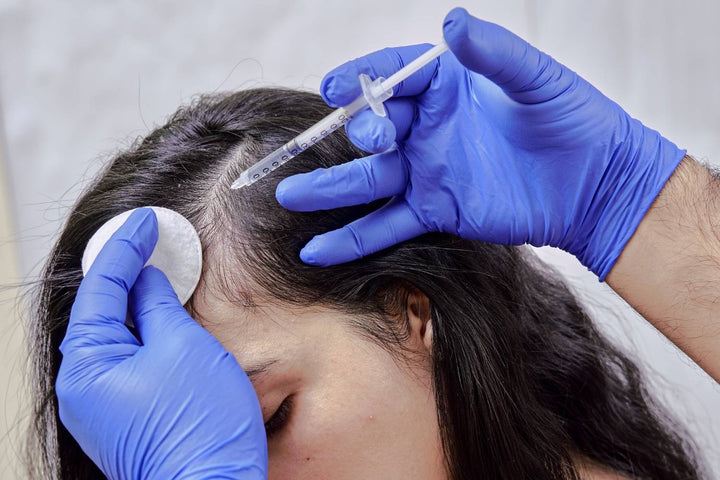
Microneedling, especially with minoxidil, and platelet-rich plasma may be discussed as adjuncts. Protocols and costs vary, and neither should be attempted without confirming the diagnosis.
Hair transplantation
A transplant moves follicles from a more resistant donor region into thinning areas. Candidacy depends on donor density, pattern stability, age, expectations, and the likelihood of future loss.
Does nutrition stop miniaturization?
Adequate nutrition supports normal hair formation, but vitamins do not directly block the genetic androgen pathway responsible for pattern hair loss. A deficiency can worsen overall density or cause additional shedding, so both issues may need attention.
Noophoric Hair+ supports healthy-looking hair and normal hair strength through daily nutritional support.* It should complement, not replace, diagnosis and treatment for androgenetic alopecia.
How to track early pattern loss
- Take baseline photos of the temples, front hairline, center part, and crown.
- Use the same lighting, camera distance, hairstyle, and hair dryness each month.
- Avoid comparing a wet-hair photo with a dry-hair photo.
- Track treatment adherence and side effects.
- Ask a dermatologist for repeat standardized imaging if the change is subtle.
Daily checking magnifies normal variation. Monthly comparison is more useful because hair grows slowly.
Frequently asked questions
What do miniaturized hairs look like?
They are finer, shorter, and sometimes lighter than nearby terminal hairs. A mixture of shaft diameters in a patterned area is an important clue.
Does a small white bulb mean the follicle died?
No. A club-shaped bulb on a shed telogen hair does not contain the entire follicle. The follicle remains in the skin and can begin another cycle.
Can miniaturization happen without high testosterone?
Yes. Pattern hair loss depends greatly on genetics and local follicle sensitivity. Routine testosterone levels can be normal.
How quickly does miniaturization progress?
Progression varies from person to person and can occur over years. Periods of faster visible change may follow a separate shedding event.
The bottom line
Hair miniaturization is an early, progressive feature of pattern hair loss. Look for changes in distribution and strand diameter rather than relying only on shedding. A dermatologist can confirm the pattern with scalp magnification and help protect follicles before density is severely reduced.
Sources
- Kuczara A, et al. Trichoscopy of Androgenetic Alopecia: A Systematic Review. 2024.
- American Academy of Dermatology. Hair loss causes.
- American Academy of Dermatology. Female pattern hair loss.
- American Academy of Dermatology. Hair loss diagnosis and treatment.
Evidence reviewed September 2026. This article is educational and is not a substitute for individualized medical diagnosis or treatment.
*These statements have not been evaluated by the Food and Drug Administration. This product is not intended to diagnose, treat, cure, or prevent any disease.

The information on noophoric.com is for informational and educational purposes only and is not intended to be medical advice. Readers should consult with a qualified healthcare professional before making changes to diet, nutrition, supplementation, medication, or lifestyle.