
Hair Breakage: Causes, Signs, and Prevention

Hair breakage happens when the fiber snaps somewhere along its length instead of shedding from the root. Heat, bleaching, chemical treatments, tight styles, rough detangling, friction, dryness, and repeated swelling and drying can weaken the cuticle until the strand breaks.
The first step is distinguishing breakage from true hair shedding, because the causes and treatments are different.
How to tell breakage from shedding
A naturally shed hair usually includes the full strand and may have a small club-shaped bulb at one end. Broken hair is shorter, lacks that root bulb, and may have a frayed or split end.
Signs of breakage include:
- Short pieces in the sink, brush, or clothing
- Uneven length or a halo of short hairs
- Split, white, or frayed ends
- Rough texture and tangling
- Increased frizz
- Breakage concentrated where hair is tied, bleached, or heated
Excessive shedding usually produces full-length hairs and reduced density from the scalp. Read our guide to hair falling out, shedding, and breakage if the difference is unclear.
Common causes of hair breakage
Bleach, permanent color, relaxers, and perms
Chemical services alter the hair shaft to change color, curl, or texture. Repeated or overlapping treatments can damage cuticle layers and weaken internal bonds.
Excessive heat
Flat irons, curling irons, hot combs, and blow dryers remove moisture and can create cracks, bubbles, and cuticle damage. Risk rises with high temperature, long contact, and repeated passes.
Tension and tight styles
Tight ponytails, buns, braids, cornrows, extensions, and weaves can break strands and pull on follicles. Ongoing tension can progress to traction alopecia, which may become permanent.
Rough detangling
Hair stretches and breaks when knots are pulled apart quickly. Wet straight hair can be especially fragile, while tightly curled or textured hair is often best detangled while damp and conditioned.
Friction
Rough towels, pillowcases, collars, hats, and repeated rubbing can wear away the cuticle, especially at the ends.
Product buildup or inadequate conditioning
Buildup can make hair feel dry or stiff, while insufficient conditioning reduces slip. Both make detangling harder and increase mechanical stress.
How to stop further breakage
- Reduce the main source: pause overlapping bleach, reduce heat, or loosen the style causing damage.
- Shampoo the scalp gently: massage the scalp and let the lather rinse through the lengths instead of scrubbing them.
- Condition every wash: conditioner smooths the cuticle and reduces friction.
- Use a leave-in or detangler: add slip before combing.
- Work from ends upward: use fingers or a wide-tooth comb and remove small tangles first.
- Blot rather than rub: use a microfiber towel or soft T-shirt.
- Lower heat and contact time: fully dry hair before flat ironing and avoid repeated passes.
- Trim split ends: a split cannot be permanently fused, and trimming prevents it from traveling farther.
Can damaged hair be repaired?
The visible hair shaft is not living tissue, so severe structural damage cannot biologically heal. Conditioners, silicones, proteins, and bond-building products can temporarily smooth, reinforce, or reduce friction. Their benefits require continued use.
The long-term strategy is to protect new growth and remove the most damaged length gradually. See our guide to growing hair longer and stronger.
Protein versus moisture
Hydrolyzed proteins can temporarily fill weak areas and improve the feel of damaged hair. Too much can make some hair feel stiff or brittle. Emollient and conditioning ingredients improve softness and slip.
Use the result as the guide. If hair feels mushy and overly stretchy after chemical damage, occasional protein may help. If it feels stiff and tangles easily, reduce protein and increase conditioning.
Nutrition and stronger-looking hair
Hair fiber is made primarily of keratin, so adequate protein and overall nutrition support the follicle that produces new hair. Iron, zinc, vitamin D, and other nutrient deficiencies can contribute to shedding or reduced quality, but supplements should target a plausible gap.
Noophoric Hair+ combines vitamins, minerals, botanicals, and amino acids, including biotin, zinc, and saw palmetto, to support fuller, stronger, healthier-looking hair from within.* It complements gentle hair care and does not repair an already split hair shaft.
When breakage needs a dermatologist
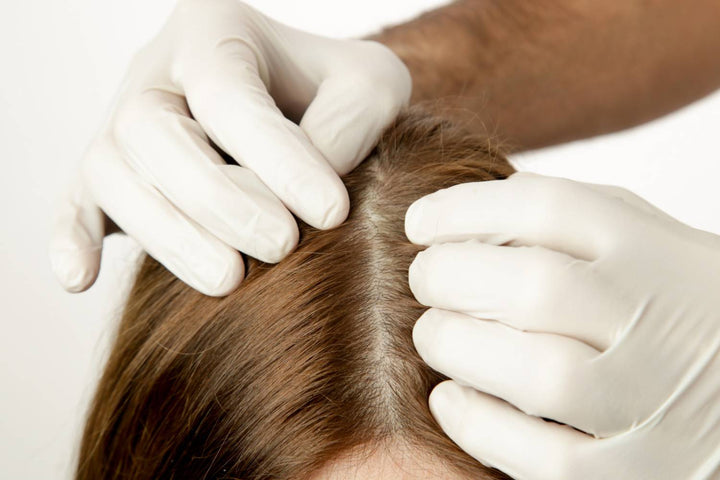
Seek evaluation when breakage is sudden, severe, concentrated near the scalp, associated with scalp pain or inflammation, or accompanied by true thinning. Hair-shaft disorders, fungal infection, traction alopecia, thyroid disease, nutritional deficiency, or another condition may need treatment.
Frequently asked questions
Does breakage mean hair is falling out?
Not necessarily. Breakage occurs along the shaft, while shedding releases a full strand from the follicle. Some people have both.
Should I cut damaged hair?
Trimming removes split and severely frayed ends. You can trim gradually if preserving length is important.
Can oil stop breakage?
Oil can reduce friction and water-related swelling for some hair types, but it cannot reverse a broken strand. Use a small amount on lengths and ends.
How long until hair looks healthier?
Conditioning changes can improve appearance immediately. Replacing damaged length depends on growth rate and may take many months.
Bottom line
Hair breakage is a fiber-damage problem. Identify the main source, reduce heat and chemical overlap, loosen tension, improve conditioning and detangling, and protect new growth. If the problem includes thinning from the scalp or does not improve, a dermatologist can distinguish breakage from hair loss.
Further reading
Sources
- American Academy of Dermatology. How to stop damaging your hair.
- American Academy of Dermatology. Hair styling without damage.
Evidence reviewed August 2026. This article is educational and is not a substitute for individualized medical diagnosis or treatment. *These statements have not been evaluated by the Food and Drug Administration. Noophoric products are not intended to diagnose, treat, cure, or prevent any disease.

The information on noophoric.com is for informational and educational purposes only and is not intended to be medical advice. Readers should consult with a qualified healthcare professional before making changes to diet, nutrition, supplementation, medication, or lifestyle.