
Silicone-Free Shampoo and Conditioner: Benefits, Myths, and Buildup

You do not automatically need silicone-free shampoo or conditioner for healthy hair. Silicones can reduce friction, improve combing, add shine, and protect damaged fibers. Some formulas can build up or weigh down certain hair, so the best choice depends on the specific silicone, the complete formula, washing routine, and desired result.
What silicones do in hair care
Silicones are polymers used in shampoos, conditioners, serums, masks, and heat protectants. They spread into a thin film over the shaft. Depending on the type and formula, that film can reduce friction, improve slip, control frizz, add shine, limit moisture loss, and distribute heat more evenly.
These are cosmetic effects on existing hair. Silicones do not feed follicles or change genetic growth patterns.
Common silicone names
- Dimethicone
- Amodimethicone
- Dimethiconol
- Cyclopentasiloxane
- Phenyl trimethicone
- Bis-aminopropyl dimethicone
These ingredients differ in molecular size, charge, volatility, deposition, and ease of removal. Treating every ingredient ending in “cone” as identical oversimplifies formulation science.
Benefits for damaged or high-friction hair
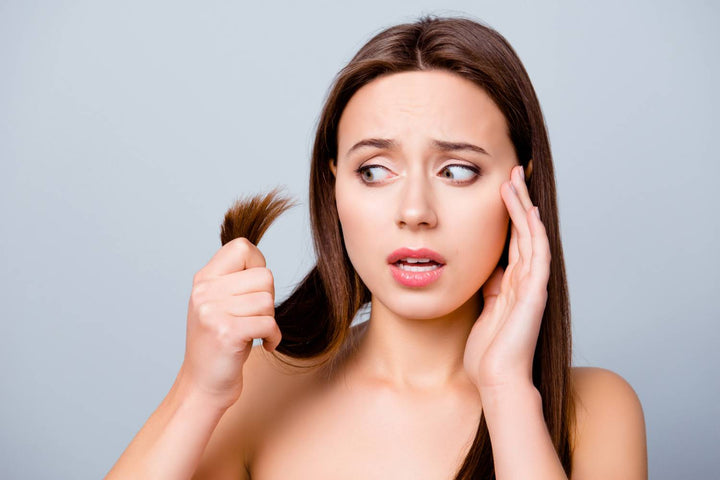
Bleaching, coloring, chemical straightening, heat, ultraviolet exposure, and weathering can lift cuticle scales and increase friction. Conditioning films help strands slide past one another, which can reduce tangling and combing force.
This can be especially useful for long, curly, tightly coiled, bleached, porous, or heat-styled hair. Less friction can mean less breakage. Our guide to hair breakage prevention explains how conditioning fits into a complete routine.
Why some people avoid silicones
Some silicone systems deposit more heavily and may leave fine hair flat, coated, or difficult to restyle. Repeated layering without effective cleansing can contribute to residue. The answer may be less product, a lighter formula, or occasional clarifying rather than universal avoidance.
Some users also choose silicone-free products because of personal preference, styling-method rules, or environmental concerns about specific persistent or cyclic compounds.
Does silicone suffocate hair?
No. The visible hair shaft is made of nonliving keratin and does not breathe. A coating can alter texture, water behavior, and product deposition, but “suffocation” is not a biologically accurate explanation.
Silicone on the scalp may feel heavy or contribute to buildup in some routines, so conditioners and serums are usually concentrated on the mid-lengths and ends unless labeled for scalp use.
Water-soluble versus insoluble
Online lists often divide silicones into soluble and insoluble categories, but real removal depends on concentration, other ingredients, and the surfactant system. Some modern silicones are water-dispersible or engineered for selective deposition. A product can cleanse and condition effectively even when a single ingredient is not water-soluble by itself.
Signs a formula may be too heavy
- Hair looks flat or greasy soon after washing
- Curls lose definition
- Strands feel coated, stiff, or unusually difficult to wet
- Styling products stop behaving as expected
- Clarifying temporarily restores volume and movement
These signs can also come from oils, waxes, polyquaterniums, hard-water minerals, or over-conditioning. Silicone is not the only possible cause.
How to choose between silicone and silicone-free
Choose silicone-containing conditioner when you want maximum slip, shine, frizz control, or heat protection and your hair responds well. Choose a silicone-free option when a lighter result works better, you prefer the feel, or a stylist recommends it for a specific process.
Evaluate the finished formula for several washes rather than judging one ingredient. A heavy silicone-free butter can weigh down hair more than a light silicone serum.
How to prevent buildup
Use the amount your density and length require, apply mainly to the lengths, and cleanse regularly. If residue persists, use an occasional clarifying shampoo, then condition. Our comparison of hair oils and serums can help you choose a finishing product.
Support stronger-looking hair
Conditioners help protect the shaft, while nutrition supports new hair produced by follicles. Noophoric Hair+ combines vitamins, minerals, botanicals, and amino acids to support fuller, stronger, healthier-looking hair as part of a complete routine.*
Bottom line
Silicones are useful conditioning ingredients, not inherently harmful fillers. They can reduce friction and protect damaged hair, although some formulas may build up or feel heavy. Choose based on performance, hair type, and routine rather than a blanket rule.
Further reading
Sources
- Hair cosmetics: an overview. 2015.
- Hair cosmetics for the hair loss patient. 2021.
- With or without silicones? A comprehensive review of their role in hair care. 2025.
Evidence reviewed August 2026. This article is educational and is not a substitute for individualized medical diagnosis or treatment. *These statements have not been evaluated by the Food and Drug Administration. Noophoric products are not intended to diagnose, treat, cure, or prevent any disease.
The information on noophoric.com is for informational and educational purposes only and is not intended to be medical advice. Readers should consult with a qualified healthcare professional before making changes to diet, nutrition, supplementation, medication, or lifestyle.