
How to Correct Brassy Orange Hair Safely at Home

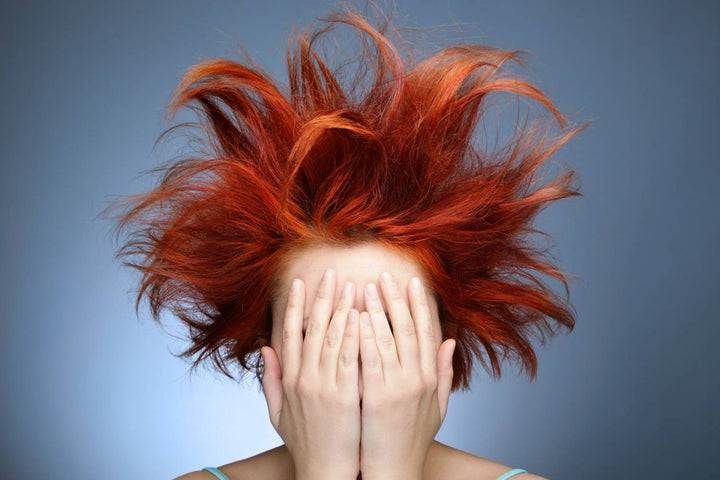
Brassy orange hair appears when warm underlying pigment remains visible after lightening or when cool artificial tones fade. The safest correction starts by identifying the level and cause. Adding more bleach automatically can turn a color problem into severe breakage.
Blue-based products can neutralize orange because blue sits opposite orange on the color wheel. Purple is used for yellow. If the hair is distinctly orange, a purple shampoo alone may have little effect.
Why hair turns orange
- Dark hair was not lightened far enough to reach the target shade
- Cool toner faded and exposed warm underlying pigment
- Permanent dye lifted natural pigment but did not deposit enough cool tone
- Hard-water minerals or product buildup changed the appearance of color
- Porous sections lost color faster than healthier sections
Choose toner by the actual undertone
Use a blue-based toner or blue shampoo for true orange. Use a blue-violet product for yellow-orange. Use purple for pale yellow. Evaluate dry hair in natural light because wet hair looks darker and can hide uneven warmth.
A toning shampoo deposits a small amount of color and is useful for maintenance. A salon toner or demi-permanent formula provides a stronger correction. More pigment is not always better, since overuse can make porous areas look muddy, gray, or uneven.
A low-risk at-home plan
- Wash once to remove styling residue.
- Dry the hair and identify whether the tone is orange, yellow-orange, or yellow.
- Strand-test a compatible blue or blue-violet toning product.
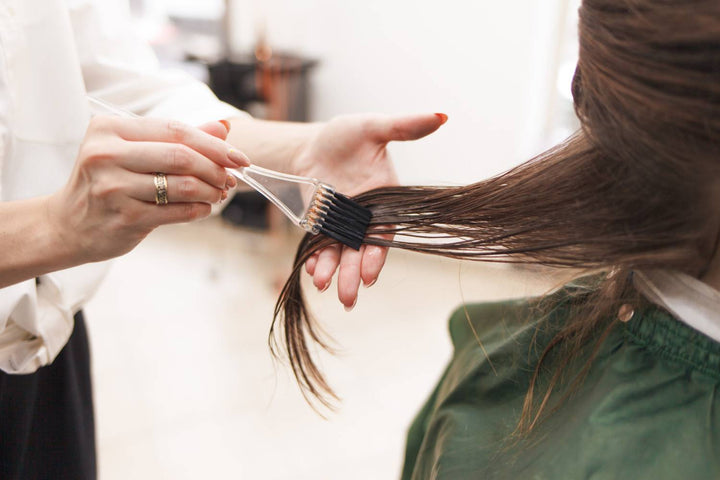
- Apply evenly and follow the label's timing.
- Rinse and condition thoroughly.
- Wait until the hair is fully dry before deciding whether to repeat.
Wear gloves and protect porous ends by applying the product there later if they absorb color quickly. Do not leave toner on beyond the instructions in an attempt to create a lighter result. Toner deposits tone and does not replace the lightening step.
When toner will not fix it
If the hair is dark orange and the goal is pale blonde, toner cannot lift it several levels. Additional lightening may be required, but only if the hair is strong enough. If it is gummy, stretching excessively, or snapping, postpone bleach and accept a darker corrective shade.
Review what bleach damage can and cannot be improved before making that decision.
Should you use box dye?
Applying ash box dye can deepen and cool an orange result, but the outcome depends on the existing level and porosity. Permanent color may add unnecessary developer exposure when a deposit-only toner would work. A very ashy formula can also turn some sections khaki or dull.
Methods to avoid
- Bleaching repeatedly in the same day
- Mixing color brands and developers without compatibility information
- Using household cleaning bleach
- Applying food coloring or fabric dye
- Using baking soda and dish soap repeatedly to strip tone
How to prevent brassiness
Use toning products only as often as needed, reduce very hot water, condition the lengths, limit repeated high heat, and protect hair from ultraviolet exposure. If hard water is suspected, use a chelating product as directed rather than stacking more toner over mineral residue.
Future correction also depends on service timing. Read how often hair can be dyed without relying on a universal calendar.
When to call a professional
Book a color correction for multiple bands, black or red permanent dye history, henna or metallic salts, severe porosity, or a target much lighter than the current level. A colorist can strand-test sections and create a multi-session plan.
Noophoric Hair+ combines vitamins, minerals, botanicals, and amino acids to support fuller, stronger, healthier-looking hair.
Further reading
Sources
This article is educational and is not a substitute for individualized medical advice.
The information on noophoric.com is for informational and educational purposes only and is not intended to be medical advice. Readers should consult with a qualified healthcare professional before making changes to diet, nutrition, supplementation, medication, or lifestyle.