
Mature Hairline vs. Receding Hairline: How to Tell

A mature hairline is a modest, usually symmetrical shift from the low rounded hairline of adolescence to a slightly higher adult shape. A receding hairline keeps moving backward and often shows progressive miniaturization at the temples. The most dependable difference is change over time, not one photograph.
What is a mature hairline?
Many men notice that the juvenile hairline becomes a little higher in late adolescence or early adulthood. The corners may move back slightly and create a more defined shape. Density immediately behind the hairline generally stays strong, and the change stabilizes.
"Mature hairline" is a practical description rather than a formal diagnosis. There is no exact number of centimeters that proves maturity. Head shape, facial proportions, inherited hairline shape, and styling all affect appearance.
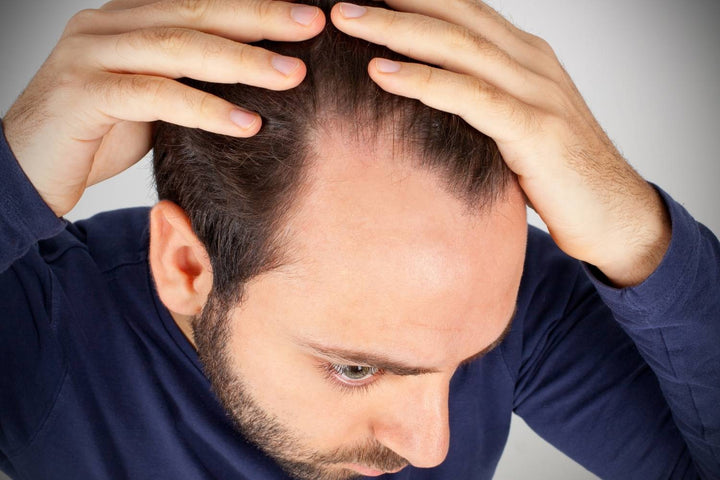
What a receding hairline looks like
A receding hairline is a common early presentation of male pattern baldness. The temples may deepen into an M or V shape, the forelock may narrow, and fine wispy hairs can appear along the leading edge. In some men, recession occurs with crown thinning; in others the front changes first.
Progressive miniaturization is the key biological clue. Susceptible follicles make shafts with smaller diameter and shorter growth phases. A dermatologist can see this variation under magnification before the change is obvious in casual photos.
Five clues that help tell the difference
- Progression: A mature hairline tends to stabilize. Pattern loss continues to change over months or years.
- Depth: Mild corner recession can be maturation. Deepening temples and a narrowing central forelock are more suspicious.
- Hair caliber: Many fine, short hairs among thicker hairs can indicate miniaturization rather than simple repositioning.
- Other areas: Simultaneous thinning at the crown or mid-scalp supports androgenetic alopecia.
- Family history: Close relatives with early pattern loss increase likelihood, but genetics are not destiny and can come from either side.
How to track your hairline correctly
Take a baseline set of photos with dry, unstyled hair. Include straight-on, both temples, top, and crown views. Repeat every three months with the same distance, lens, room, lighting, and hair length when possible. Marking the camera location can improve consistency.
Avoid drawing conclusions from wet hair, a fresh haircut, harsh overhead light, or a selfie taken with a wide-angle lens. Those conditions exaggerate scalp visibility. Our guide to an uneven hairline can also help when one corner is naturally higher than the other.
When to see a dermatologist
Book an assessment if recession is clearly progressing, you see thinning elsewhere, or you want to preserve as much density as possible. Seek faster care for sudden patches, pain, burning, scaling, eyebrow loss, or a shiny band where follicle openings are missing. Those features do not fit uncomplicated male pattern loss.
The examination may include dermoscopy, a hair pull test, and review of medications, illness, diet, and family history. Blood work is not automatically required for a typical pattern, but it can be appropriate if diffuse shedding or symptoms suggest another cause.
What can you do about recession?
Men with confirmed androgenetic alopecia may consider topical minoxidil and prescription finasteride. Results vary, treatment takes months, and benefits generally require continued use. Potential adverse effects, fertility plans, medical history, and personal priorities should guide the choice with a clinician. The Norwood stage guide shows how frontal recession can relate to later crown change.
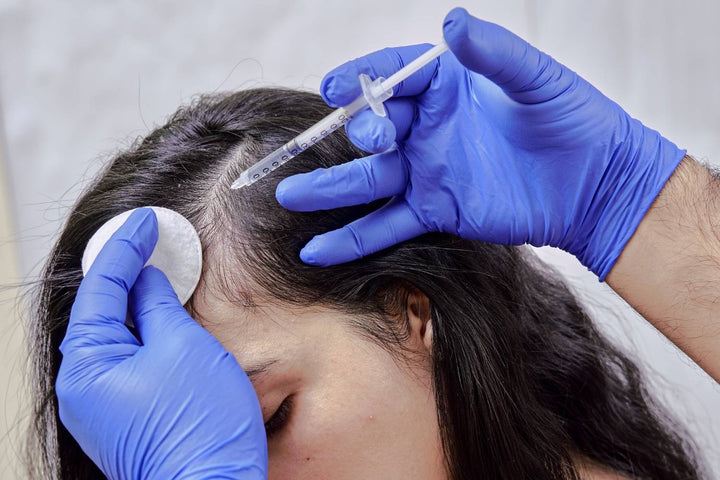
Low-level light devices, platelet-rich plasma, and transplantation are other options with different evidence, cost, and maintenance requirements. A transplant should be planned around the likely lifetime pattern, not just the present hairline.
Does nutrition change the hairline?
Nutrition cannot reshape a genetically maturing hairline or block DHT, but low intake and deficiencies can add diffuse shedding that makes recession look worse. Prioritize adequate protein and a varied diet. Noophoric Hair+ can provide convenient daily nutritional support for healthy-looking hair, but it is not a treatment for a receding hairline.
Frequently asked questions
At what age does a hairline mature?
It often occurs from the late teens through the twenties, but age alone cannot distinguish it from early pattern loss.
Can a mature hairline have an M shape?
Yes. A shallow, stable M can be a normal adult shape. Deepening corners and miniaturized hairs make ongoing recession more likely.
Can one temple recede faster?
Yes. Natural asymmetry is common, and androgenetic loss is not always perfectly even. The direction of change across serial photos matters more than symmetry alone.
Bottom line
A modest stable shift with strong density behind it is more consistent with a mature hairline. Continued backward movement, miniaturized hairs, crown thinning, and declining density suggest recession. Standardized photos and a dermoscopic exam provide a clearer answer than internet diagrams alone.
Evidence reviewed September 2026. This article is educational and is not a substitute for individualized medical diagnosis or treatment.
*These statements have not been evaluated by the Food and Drug Administration. This product is not intended to diagnose, treat, cure, or prevent any disease.
Sources

The information on noophoric.com is for informational and educational purposes only and is not intended to be medical advice. Readers should consult with a qualified healthcare professional before making changes to diet, nutrition, supplementation, medication, or lifestyle.