
Scarring Alopecia: Warning Signs, Diagnosis, and Treatment

Scarring alopecia is a group of disorders in which inflammation damages and replaces hair follicles with scar tissue. Hair lost from a destroyed follicle usually cannot regrow, so early recognition is important. Warning signs include scalp pain, burning, persistent itching, redness, scale around individual hairs, pustules, and smooth or shiny areas where follicle openings have disappeared.
How scarring alopecia differs from common hair loss
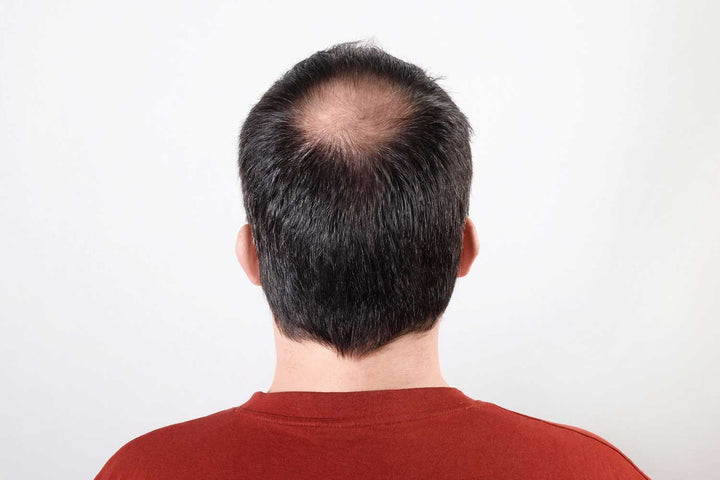
In male and female pattern hair loss, follicles become smaller but remain present. In telogen effluvium, intact follicles release more resting hairs. Primary cicatricial alopecias instead target the follicle itself. Once scar tissue replaces it, medicines cannot revive that follicle.
The goal of treatment is therefore to stop active inflammation, preserve remaining follicles, and relieve symptoms. Cosmetic restoration can be considered after disease has been inactive for a sustained period.
Important types
- Lichen planopilaris: Often causes patchy loss with redness and scale around remaining hairs.
- Frontal fibrosing alopecia: Commonly recedes the frontal and temporal hairline and may thin the eyebrows.
- Central centrifugal cicatricial alopecia: Usually begins at the crown and is most common in Black women.
- Discoid lupus erythematosus: Can produce inflamed, scaly plaques that heal with pigment change and scarring.
- Folliculitis decalvans and dissecting cellulitis: May involve pustules, crusting, drainage, or tufted hairs.
Warning signs that deserve prompt care
Do not wait for a large bald patch if you have burning, tenderness, severe itch, perifollicular scale, pustules, crusting, or a spreading shiny area. Eyebrow loss, facial bumps, and loss of body hair can accompany some forms. The combination of symptoms and disappearing follicle openings is more concerning than ordinary shedding.
A painful or itchy crown deserves particular attention because CCCA can begin at the crown before the area looks dramatically thin.
How dermatologists diagnose it
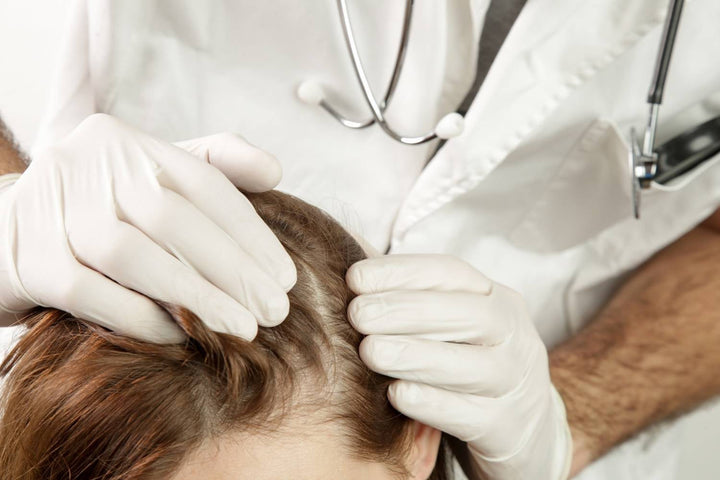
The dermatologist examines the scalp and uses dermoscopy to look for inflammation, scale, broken hairs, scarring, and changes around follicles. A scalp biopsy is often the decisive test. It is generally taken from an active border where inflamed follicles remain, not from the smooth center where diagnostic features may be gone.
Blood tests are selected based on symptoms and suspected type. A culture may be used if infection is possible. Because treatments differ, self-diagnosing from a photo can delay the care that protects remaining hair.
Treatment strategies
Treatment depends on the diagnosis and activity. Dermatologists may use topical or injected corticosteroids, oral anti-inflammatory medicines, antimalarial drugs such as hydroxychloroquine, tetracycline-class medicines, immunosuppressants, or targeted therapies. Antibiotics may be needed when a bacterial component is present.
Improvement is measured by reduced pain, itch, redness, scale, and spread. New hair in scarred areas is not the main expectation. Photographs and symptom tracking help determine whether disease is quiet.
Hair care while the scalp heals
Choose gentle cleansing and avoid pulling styles, chemical burns, scratching, and heat directly on inflamed skin. Styling did not cause every form of scarring alopecia, but trauma can aggravate a vulnerable scalp. Wigs, toppers, fibers, and scarves can provide coverage without delaying treatment.
Adequate nutrition supports the normal hair that remains. Noophoric Hair+ can complement a balanced diet as daily nutritional support, but supplements do not control follicular inflammation and must not delay dermatology care.
Can a hair transplant restore scarred areas?
Sometimes, but only after a specialist confirms that disease has been inactive long enough. Grafts placed into scarred tissue may have lower survival, and inflammation can reactivate. A surgeon experienced with cicatricial alopecia should coordinate with the treating dermatologist.
Frequently asked questions
Is all shiny scalp scarred?
No. Lighting and advanced pattern loss can make scalp look smooth. Dermoscopy and sometimes biopsy determine whether follicle openings are truly absent.
Does scarring alopecia spread forever?
Not necessarily. Many cases can be stabilized, but activity can fluctuate and follow-up remains important.
Can it occur with another type of hair loss?
Yes. Pattern loss, traction, or telogen effluvium can coexist and may need separate management.
Bottom line
Scarring alopecia is time-sensitive because treatment protects follicles that still exist. Pain, burning, severe itch, redness, scale, pustules, and missing follicle openings are reasons to seek a dermatologist promptly.
Evidence reviewed September 2026. This article is educational and is not a substitute for individualized medical diagnosis or treatment.
*These statements have not been evaluated by the Food and Drug Administration. This product is not intended to diagnose, treat, cure, or prevent any disease.
Sources

The information on noophoric.com is for informational and educational purposes only and is not intended to be medical advice. Readers should consult with a qualified healthcare professional before making changes to diet, nutrition, supplementation, medication, or lifestyle.