
Central Centrifugal Cicatricial Alopecia: Signs and Care

Central centrifugal cicatricial alopecia, or CCCA, is a scarring hair loss disorder that usually begins near the crown and expands outward. It occurs predominantly in Black women, although anyone can be affected. Early treatment can calm inflammation and preserve follicles before permanent scarring develops.
Early signs of CCCA
The first change may be breakage or reduced density at the center of the scalp rather than a completely bald spot. Some people have no discomfort. Others notice itching, burning, tenderness, tingling, or small bumps. As the condition progresses, the center can become smooth and shiny with fewer visible follicle openings.
Because a natural crown whorl shows scalp, progression and symptoms matter. Our broader guide to crown hair loss explains other possibilities, but central symptoms in a Black woman deserve specific screening for CCCA.
What causes it?
CCCA is an inflammatory disease with a genetic component. Variants involving the PADI3 gene have been associated with susceptibility in some patients. Hairstyling practices may contribute to damage or symptoms but are not considered the sole cause. Someone can develop CCCA without using relaxers, hot combs, extensions, or tight braids.
Research has also examined associations with conditions such as type 2 diabetes, uterine fibroids, and metabolic disorders. An association does not mean one condition directly causes the other, but your dermatologist may consider the whole health picture.
How dermatologists confirm CCCA
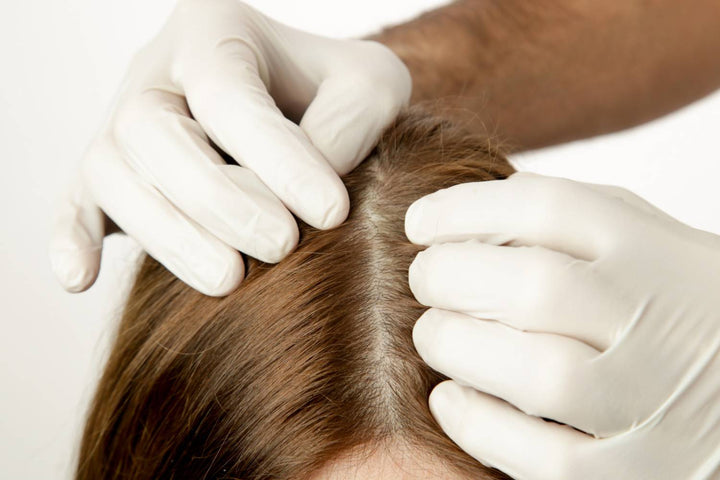
The examination focuses on the distribution, symptoms, breakage, scale, redness, and follicle openings. Dermoscopy can reveal broken hairs, white patches, and changes around follicles. A biopsy from an active area is often recommended because several crown disorders can look alike.
Earlier diagnosis is valuable even when the spot is small. Waiting for a smooth bald center reduces the number of follicles that treatment can save. The broader scarring alopecia warning-sign guide explains why missing follicle openings change the urgency.
Treatment
Treatment aims to suppress inflammation and prevent spread. Dermatologists commonly use topical or injected corticosteroids. Oral doxycycline or other anti-inflammatory medicines may be prescribed. Some patients need hydroxychloroquine or another systemic therapy. Minoxidil may be added to maximize growth from surviving follicles, but it does not replace control of inflammation.
Follow-up tracks symptoms, redness, scale, and enlargement. A quiet scalp can still require maintenance because CCCA may reactivate.
Hair-care changes that reduce stress
- Choose loose styles that do not hurt during or after installation.
- Reduce heat and avoid repeated passes with hot tools.
- Space chemical services and stop any product that burns the scalp.
- Detangle gently, especially at the crown where breakage may be early.
- Tell your stylist that you are being treated for a scalp disorder.
These changes support comfort and reduce additional trauma. They are not a substitute for medical therapy when inflammation is active. If the main problem is snapping rather than scalp symptoms, compare the signs with ordinary hair breakage.
Nutrition and whole-person care
Ask about testing if diet, heavy periods, fatigue, or another symptom suggests a deficiency. Correcting low iron or inadequate protein can reduce an overlapping source of shedding, but vitamins cannot reverse scar tissue. Noophoric Hair+ may complement a balanced diet as nutritional support for healthy-looking hair while a dermatologist manages CCCA.
Can hair grow back?
Hair may thicken where follicles remain but are inflamed or miniaturized. Smooth areas with destroyed follicles are unlikely to regrow. Hair transplantation is considered cautiously only after extended disease stability because grafts can fail or inflammation can return.
Frequently asked questions
Is CCCA caused by relaxers?
No single practice fully explains CCCA. Painful, high-tension, or burning practices can add injury and should be changed, but biology and genetics also matter.
Can men get CCCA?
Yes, although it is diagnosed far more often in women of African descent.
Should CCCA itch?
It can itch, burn, or feel tender, but some people have no symptoms. Absence of discomfort does not rule it out.
Bottom line
Central crown thinning, breakage, or discomfort can be an early sign of CCCA. A dermatology visit before the area becomes smooth gives treatment the best opportunity to preserve functioning follicles.
Evidence reviewed September 2026. This article is educational and is not a substitute for individualized medical diagnosis or treatment.
*These statements have not been evaluated by the Food and Drug Administration. This product is not intended to diagnose, treat, cure, or prevent any disease.
Sources


The information on noophoric.com is for informational and educational purposes only and is not intended to be medical advice. Readers should consult with a qualified healthcare professional before making changes to diet, nutrition, supplementation, medication, or lifestyle.