
What Happens When You Stop Minoxidil?

When you stop minoxidil, hair that depended on the treatment usually loses that support and gradually returns toward the density expected from the underlying condition. Increased shedding may begin within a few months. Minoxidil does not make healthy hair "addicted," but its benefit generally requires continued use.
What minoxidil changes
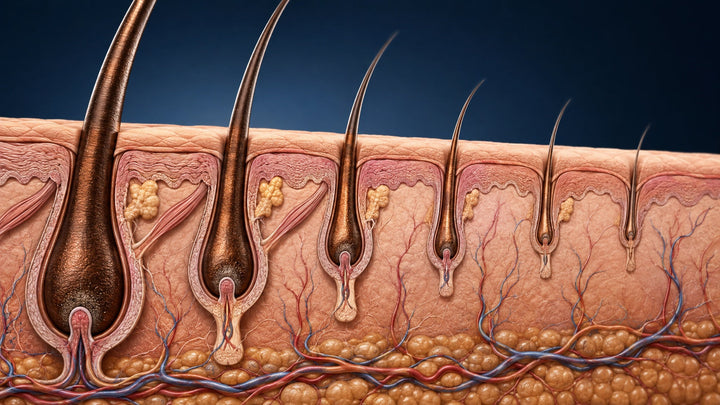
Minoxidil can prolong growth, shorten the resting phase, and increase shaft diameter in responsive follicles. It does not permanently remove the genetic or medical driver of hair loss. Stopping allows those follicles to resume the course they would have followed without treatment.
The likely timeline after stopping
Changes are not immediate because hair cycles slowly. Some people notice shedding around two to four months after discontinuation, followed by reduced density over subsequent months. Timing varies with diagnosis, duration of use, response, and other treatments.
The final appearance may seem worse than the day you first started because the underlying condition continued aging in the background. That does not prove minoxidil caused extra permanent loss.
Do you need to taper?
There is no established taper that preserves minoxidil-dependent gains after treatment ends. Some clinicians gradually reduce frequency to make the transition easier to observe, but follicles will still lose ongoing stimulation. Follow the prescriber's plan for oral minoxidil because it also affects blood pressure and fluid balance.
Reasons people stop
- Scalp irritation, flaking, or unwanted texture from topical products
- Unwanted facial or body hair
- Cost or difficulty maintaining daily use
- Dizziness, swelling, or other systemic effects
- Pregnancy planning or pregnancy
- No meaningful result after an adequate supervised trial
Address the reason before abandoning treatment. A different topical vehicle may reduce irritation, while a simpler schedule or another evidence-based treatment may improve adherence. Systemic symptoms need clinician review.
What can maintain results?
Another treatment can sometimes support the same follicles, but nothing guarantees seamless retention. Options depend on diagnosis and may include finasteride, dutasteride, spironolactone, low-level light therapy, platelet-rich plasma, or other clinician-directed approaches. Many are sex-specific, off-label, or unsuitable during pregnancy.
For male pattern loss, review finasteride versus dutasteride. For women, spironolactone may be discussed when androgen sensitivity is relevant.
If you stopped because of a shed
An early shed can occur after starting minoxidil and often settles. Repeatedly starting and stopping makes cycles harder to interpret. Learn the expected minoxidil shedding timeline and contact a dermatologist if the loss is severe, prolonged, patchy, or symptomatic.
Nutrition and supportive care
Adequate nutrition supports normal hair structure but does not preserve minoxidil-generated gains by itself. Noophoric Hair+ can complement a balanced diet as daily nutritional support for healthy-looking hair, not as a direct substitute for hair-loss medication.
When to seek medical advice
Discuss stopping oral minoxidil with the prescriber. Seek care for chest pain, faintness, rapid heartbeat, swelling, or sudden weight gain. A dermatologist should assess rapid loss, smooth patches, pain, scale, or scarring because those features may indicate a different diagnosis.
Frequently asked questions
Will I lose all my hair if I stop?
No. You generally lose gains maintained by minoxidil and return toward the course of the underlying condition, not automatically lose every hair.
Can I restart later?
Often yes, if it remains medically appropriate, but regaining the same density is not guaranteed and another early shed may occur.
Does one missed day matter?
An occasional missed application is different from stopping for months. Do not double the next dose unless the label or prescriber says to do so.
Bottom line
Minoxidil benefits are usually maintenance-dependent. Before stopping, clarify why, discuss alternatives, and set realistic expectations for shedding over the next several months. Systemic adverse effects and pregnancy considerations need clinician guidance.
Evidence reviewed September 2026. This article is educational and is not a substitute for individualized medical diagnosis or treatment.
*These statements have not been evaluated by the Food and Drug Administration. This product is not intended to diagnose, treat, cure, or prevent any disease.
Sources

The information on noophoric.com is for informational and educational purposes only and is not intended to be medical advice. Readers should consult with a qualified healthcare professional before making changes to diet, nutrition, supplementation, medication, or lifestyle.