
Does Hairspray Cause Hair Loss? Buildup, Breakage, and Safe Use

Hairspray does not usually cause follicle-based hair loss, but overuse can contribute to dryness, buildup, scalp irritation, and breakage. The greatest mechanical risk comes from brushing or pulling hair after a strong-hold film has made strands stiff and stuck together.
How hairspray works
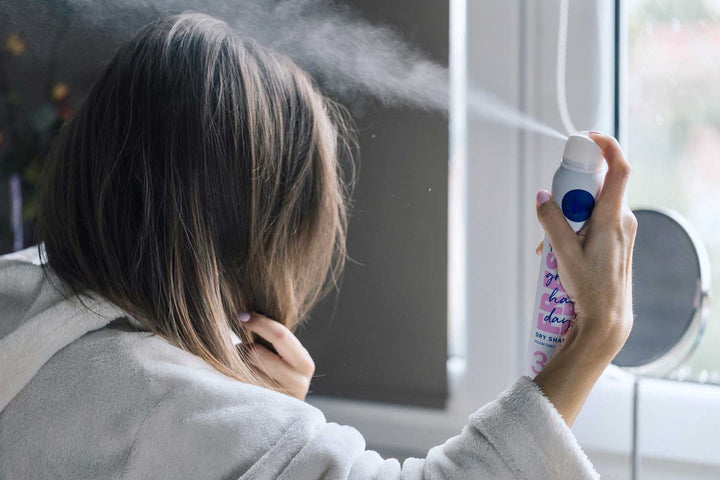
Hairsprays contain film-forming polymers dissolved or suspended in alcohol, water, or a blend of solvents. As the liquid evaporates, a thin film helps hold strands in position. Aerosol formulas use a propellant, while pump sprays rely on a mechanical nozzle.
Hold level, droplet size, flexibility, fragrance, alcohol content, and humidity resistance vary. A flexible formula behaves differently from a hard lacquer, so the ingredient list alone does not tell you everything about performance.
Hair loss versus breakage
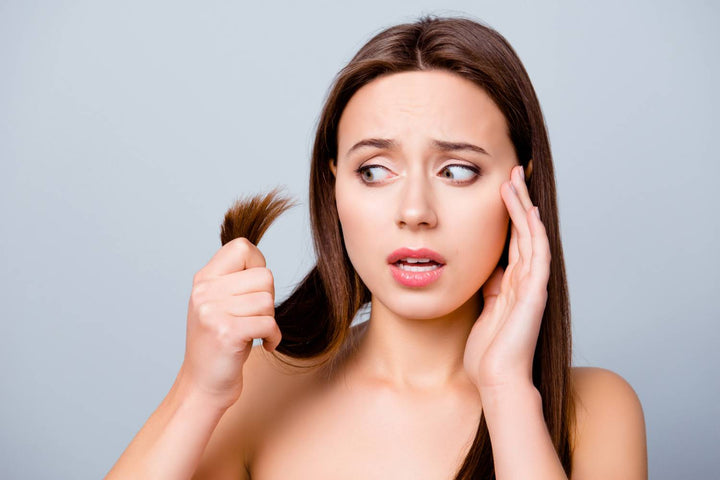
True shedding releases a full hair from the follicle, often with a small club-shaped bulb at one end. Breakage leaves shorter pieces with uneven or frayed ends. Hairspray is more likely to affect the shaft than the follicle.
Strong hold can bind neighboring fibers. Brushing, backcombing, tight styling, or sleeping on heavily sprayed hair may increase friction and snapping. Our guide to hair breakage explains how to distinguish damaged pieces from shed hairs.
Can hairspray irritate the scalp?
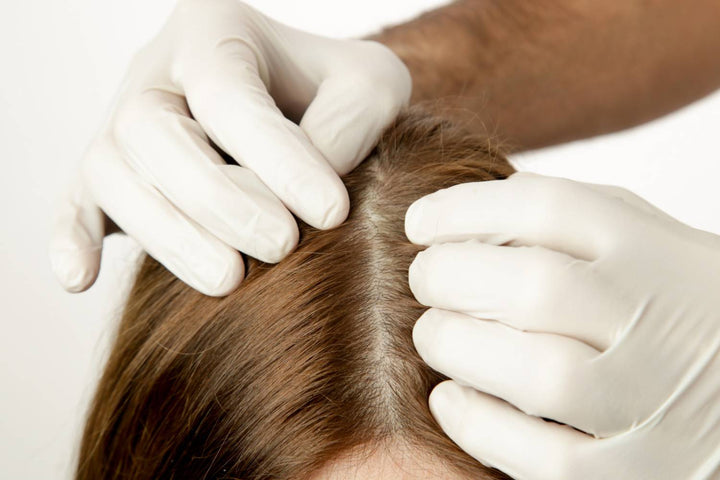
Yes. Fragrance, preservatives, solvents, botanicals, and other ingredients can cause irritant or allergic contact dermatitis in susceptible people. Symptoms may include itching, burning, redness or discoloration, scale, swelling, and a rash around the hairline, ears, face, or neck.
Aerosol mist can also irritate the eyes, nose, or lungs. Use it in a ventilated space and avoid spraying directly toward the face.
Does buildup clog follicles?
Styling residue can collect on the scalp and hair, especially when products are layered for several days. This may make roots look dull or greasy and can worsen itching in people with dandruff or seborrheic dermatitis. It does not mean that every polymer permanently plugs a follicle.
Regular cleansing removes most residue. A clarifying shampoo can be used occasionally if your usual wash leaves persistent buildup, but aggressive clarifying every day may dry the shaft.
How to use hairspray with less damage
- Use the lowest hold that achieves the style.
- Spray from the distance listed on the product.
- Aim mainly at the finished style rather than soaking the scalp.
- Let each light layer dry before deciding whether more is needed.
- Do not repeatedly brush through a hard, sticky film.
- Wash out heavy buildup before detangling.
- Keep aerosols away from heat, sparks, and open flames.
Removing hairspray gently
Wet the hair thoroughly, apply shampoo to the scalp, and let the lather flow through the lengths. Follow with conditioner to reduce friction. Detangle from the ends upward using fingers or a wide-tooth comb.
If residue remains, use a compatible clarifying shampoo occasionally rather than scrubbing the scalp or repeating harsh washes in one session.
Who should be extra careful?
People with eczema, psoriasis, seborrheic dermatitis, fragrance allergy, asthma, or a history of reactions to cosmetics may need fragrance-free or non-aerosol options. Color-treated, bleached, relaxed, fine, or tightly coiled hair may break more easily when stiffened and manipulated.
If a rash repeatedly returns with a product, stop using it. A dermatologist can perform patch testing to distinguish allergy from irritation and identify the ingredient responsible. Our article on hair-product allergens explains the process.
When thinning needs a separate evaluation
A widening part, receding hairline, smooth bald patch, scalp pain, scarring, or persistent heavy shedding is not adequately explained by hairspray alone. Pattern loss, telogen effluvium, alopecia areata, thyroid disease, iron deficiency, medication effects, and other causes require different care.
Support stronger-looking hair
Style lightly, cleanse the scalp, condition the lengths, limit high heat, and meet protein and micronutrient needs. Noophoric Hair+ combines vitamins, minerals, botanicals, and amino acids to support fuller, stronger, healthier-looking hair as part of a complete routine.*
Bottom line
Hairspray is unlikely to cause permanent hair loss when used normally. The practical risks are stiffness, friction, breakage, buildup, and irritation. Apply less, avoid forceful brushing through a hard film, wash it out regularly, and investigate persistent scalp symptoms or patterned thinning separately.
Further reading
Sources
- Gavazzoni Dias MFR. Hair cosmetics: an overview. International Journal of Trichology. 2015.
- Contact dermatitis to hair cosmetics: current diagnostic recommendations. 2021.
Evidence reviewed August 2026. This article is educational and is not a substitute for individualized medical diagnosis or treatment. *These statements have not been evaluated by the Food and Drug Administration. Noophoric products are not intended to diagnose, treat, cure, or prevent any disease.
The information on noophoric.com is for informational and educational purposes only and is not intended to be medical advice. Readers should consult with a qualified healthcare professional before making changes to diet, nutrition, supplementation, medication, or lifestyle.