
Karanja Oil for Hair: Conditioning Claims and Safety

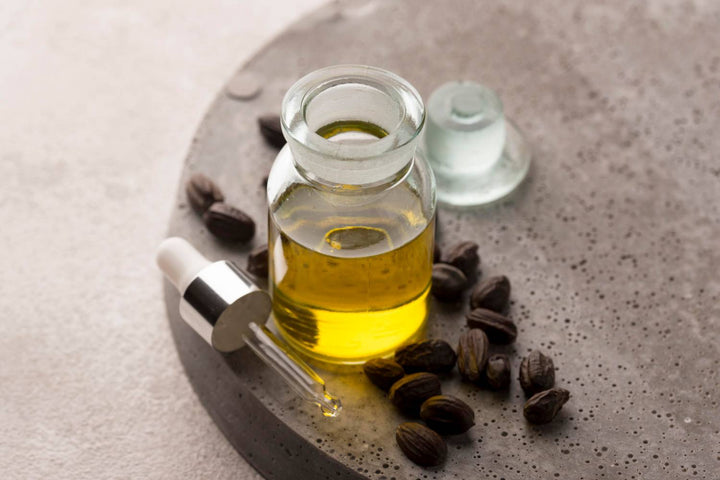
Karanja oil is pressed from seeds of Millettia pinnata, also called pongamia. It is used in traditional and cosmetic products, but evidence for hair benefits is limited. It may coat the strand and add lubrication, while unrefined oil and concentrated formulations can irritate skin.
Claims that karanja oil regrows hair, treats infection, or replaces sunscreen are not established by strong clinical trials.
What karanja oil may do for hair
Like other plant oils, it can form a film on the cuticle, reduce friction, and improve shine. A finished conditioner containing a small amount may feel different from pure oil because emulsifiers and other conditioning agents control spread.
Who might try it?
- Coarse or dry hair that tolerates rich oils
- Weathered ends needing temporary lubrication
- People using a properly formulated cosmetic product with clear directions
Fine, oily, or sensitive scalps may be poor candidates. There are many better-studied conditioning ingredients if irritation risk is a concern.
How to use it more safely
- Choose a cosmetic product intended for hair or scalp use.
- Follow its dilution and contact-time instructions.
- Patch test on a small area before wider use.
- Keep it away from eyes, lips, and broken skin.
- Start on the hair lengths rather than the scalp.
- Stop for burning, rash, swelling, or persistent itching.
Does karanja oil grow hair?
There are not high-quality human trials showing that karanja oil treats androgenetic alopecia, alopecia areata, or telogen effluvium. Laboratory antimicrobial or antioxidant activity does not prove follicle regrowth.
If thinning is progressive, review medical conditions that cause hair loss and seek diagnosis.
Scalp infections and dandruff
Do not use karanja oil as self-treatment for ringworm, bacterial infection, seborrheic dermatitis, or psoriasis. Tinea capitis often requires prescription oral antifungal medicine. Delaying treatment can worsen inflammation and loss.
For recurrent scale, read the differences between scalp psoriasis and common dandruff problems.
Is karanja a natural sunscreen?
Plant oils may absorb some ultraviolet wavelengths in laboratory testing, but they do not provide a reliable labeled SPF on the scalp or skin. Use a broad-spectrum, water-resistant sunscreen and physical coverage. Do not substitute karanja oil for tested sun protection.
Karanja versus neem
Both oils are used traditionally and have strong odors and biologically active compounds. Neither is automatically safe because it is natural. Their chemistry differs, so one should not be substituted for the other in a formula without professional guidance.
Pregnancy, children, and pets
Safety data for concentrated karanja oil are limited. Avoid use during pregnancy, breastfeeding, or on children unless a qualified healthcare professional confirms the specific product is appropriate. Keep it away from pets and prevent ingestion.
What to expect
If a cosmetic formula works, the same-day result should be easier detangling or shine. Do not wait months for regrowth from an oil that is irritating the scalp. A product that burns is not stimulating circulation in a beneficial way.
Why stronger is not better
Karanja contains biologically active compounds that make concentration important. A dark color, strong odor, or tingling sensation does not prove potency in a useful sense. Products intended for agriculture, lamps, or industrial use should never be substituted for a cosmetic-grade formula.
The bottom line
Karanja oil may function as a conditioning ingredient, but evidence is insufficient for hair-growth or medical claims. Use only a clearly labeled cosmetic formula, patch test, and prioritize safer established care for scalp disease.
Noophoric Hair+ combines vitamins, minerals, botanicals, and amino acids to support fuller, stronger, healthier-looking hair.
Further reading
Related reading
- Carrot Seed Oil for Hair and Skin: Claims, Dilution, and Safety
- Soybean Oil for Hair: Conditioning Benefits and Growth Claims
Sources
This article is educational and is not a substitute for individualized medical advice.
The information on noophoric.com is for informational and educational purposes only and is not intended to be medical advice. Readers should consult with a qualified healthcare professional before making changes to diet, nutrition, supplementation, medication, or lifestyle.