
Protein Treatments for Hair: Benefits, Buildup, and Safe Use

Protein treatments can make damaged hair feel stronger, smoother, or more substantial for a time. They are most useful when the hair shaft has been weathered by bleaching, permanent color, chemical services, heat, or repeated mechanical stress. They are not a universal cure for dryness, and they do not permanently repair a strand.
The word protein covers many ingredients and formulas. A mild conditioner with hydrolyzed amino acids is different from an intensive reconstructing treatment. Results depend on the molecule size, formula, contact time, existing damage, and how often the product is used.
What protein does to hair
Hair is primarily made of keratin. Damage erodes the protective cuticle and alters proteins and lipids within the fiber. Hydrolyzed proteins are broken into smaller fragments that can deposit on the surface and, depending on size, penetrate some damaged areas. This can temporarily improve strength, hydrophobicity, and feel.
The benefit washes out over time. Hair fibers cannot biologically regenerate because the visible strand is not living tissue. Protein treatments are better understood as temporary cosmetic reinforcement rather than permanent reconstruction.
Who may benefit?
- Hair that has been bleached or permanently colored
- Hair exposed to chemical straightening or permanent waving
- Strands that feel unusually weak when wet
- Hair with increased porosity, roughness, or breakage after processing
Protein may not be the first answer for hair that is simply dry, tangled, or coated with product. Dryness often responds to conditioning and reduced heat. Buildup may require a cleansing adjustment. If hair is breaking, use our guide to identify common causes of hair breakage before adding treatments at random.
Signs a treatment may be too much
There is no formal medical diagnosis called protein overload, but consumers use the phrase when hair becomes stiff, rough, tangled, or less flexible after repeated protein-rich products. Those signs can also come from chemical damage, mineral deposits, or inadequate conditioning.
If a protein treatment makes hair feel worse, stop it and return to a simple shampoo and conditioner routine. Do not try to correct the problem by stacking more masks. Severely damaged ends may need to be trimmed.
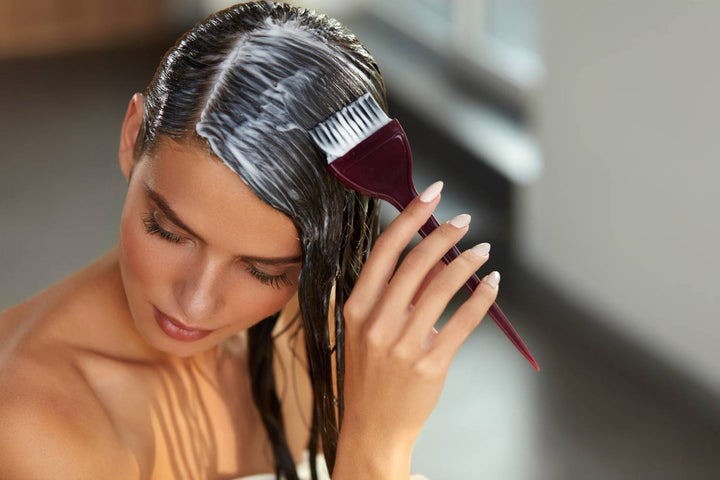
How to use a protein treatment safely
- Choose a product intended for your hair type and level of damage.
- Patch test if you have sensitive skin or a history of cosmetic allergy.
- Follow the label rather than leaving it on for extra time.
- Rinse completely and use conditioner if the instructions recommend it.
- Assess the result after several washes before repeating.
Do not combine an intensive protein product with several other protein-rich leave-ins and stylers unless you know your hair tolerates the combination. Ingredient lists may include hydrolyzed keratin, collagen, wheat protein, rice protein, silk protein, or amino acids.
Protein versus moisture
Hair does not literally balance protein and moisture as if they were opposite forces, but it does need sufficient flexibility and lubrication to resist breakage. Conditioners reduce friction and help the cuticle lie flatter. Protein-based ingredients may reinforce damaged areas temporarily. Many well-designed formulas use both types of ingredients.
The popular strand stretch test is not a precise diagnostic tool. Wet hair naturally stretches, and results vary along a single head of hair. Your processing history and the way hair responds after a full wash are more useful than a viral one-strand experiment.
What protein treatments cannot do
They cannot reactivate inactive follicles, treat pattern hair loss, correct iron deficiency, or restore a split end permanently. If hair is shedding from the root, becoming patchy, or thinning at the crown, see a healthcare professional. The issue may be unrelated to the products used on the shaft.
Rice water is often marketed as a natural protein treatment, but its hair-growth claims are not established and residue can make some hair feel stiff. Read our evidence review of rice water for hair growth.
Nutrition and new hair
Topical protein acts on existing hair. Dietary protein supplies amino acids used throughout the body, including by growing follicles. A varied diet and correction of confirmed deficiencies matter more than applying food ingredients directly to the scalp.
Noophoric Hair+ combines vitamins, minerals, botanicals, and amino acids to support fuller, stronger, healthier-looking hair.
Further reading
- Collagen for Hair Growth: Evidence and Expectations
- L-Lysine for Hair Growth: Protein, Iron, and Evidence
Sources
This article is educational and is not a substitute for individualized medical advice.
The information on noophoric.com is for informational and educational purposes only and is not intended to be medical advice. Readers should consult with a qualified healthcare professional before making changes to diet, nutrition, supplementation, medication, or lifestyle.