
Co-Washing Hair: Benefits, Buildup, and Who Should Avoid It

Co-washing means cleansing the hair and scalp with a conditioner or cleansing conditioner instead of conventional shampoo. It can reduce the dry, rough feel that some people experience with strong cleansers, especially in curly, coily, coarse, or chemically processed hair. It also removes oil and buildup less effectively than shampoo.
Co-washing is a tool, not a rule. Many people get better results by alternating it with shampoo rather than eliminating shampoo completely.
How co-washing works
Dedicated cleansing conditioners contain mild surfactants and conditioning agents. Mechanical massage and rinsing help loosen some sweat, dirt, and residue, while the formula deposits ingredients that reduce friction. A regular rinse-out conditioner may not contain enough cleansing ingredients to perform the same job.
Because the cleansing is mild, the method preserves more of the lubricated feel that textured hair often needs. The tradeoff is that oil, insoluble silicones, waxes, heavy butters, and styling polymers may accumulate.
Who may benefit?
- Curly or tightly coiled hair that becomes rough with frequent shampooing
- Coarse, dry, or highly porous hair
- Chemically processed hair that needs gentler cleansing
- People who wash frequently after exercise but do not need a full shampoo every time
For a complete texture-focused routine, read our guide to cleansing and conditioning coily hair.
Who should be cautious?
An oily scalp, dandruff, seborrheic dermatitis, psoriasis, frequent sweating, or heavy styling-product use can make co-washing alone inadequate. A medicated dandruff shampoo needs direct scalp contact and the label's specified contact time. Co-wash residue should not prevent treatment from reaching the skin.
Fine hair may become flat and coated quickly. Stop if you notice increasing itch, odor, greasy scale, bumps, or a persistent waxy feel.
How to co-wash correctly
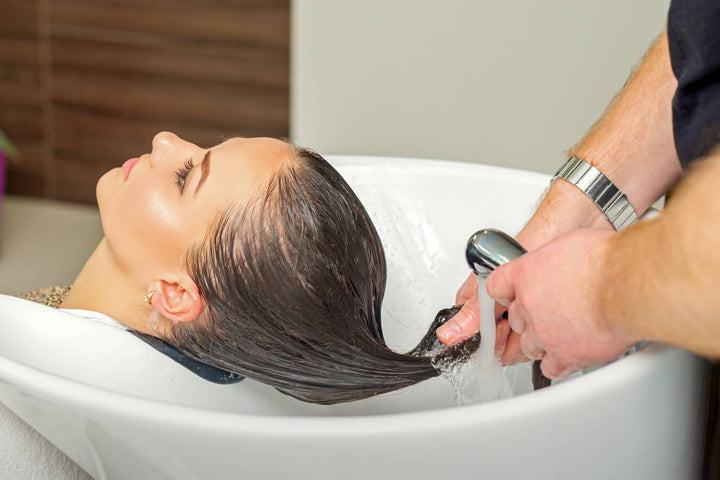
- Saturate the scalp and hair completely with warm water.
- Apply a product labeled as a cleansing conditioner or co-wash.
- Massage the scalp with the pads of the fingers for several minutes.
- Work the product through the lengths and detangle gently.
- Leave it on only as directed.
- Rinse thoroughly, separating dense sections so water reaches the scalp.
Do not scratch with fingernails. If you need to scrape residue from the scalp, the routine is not cleansing adequately.
How often should you shampoo?
There is no universal schedule. Shampoo when the scalp feels oily, itchy, coated, or does not smell fresh, and after heavy product use. Some people alternate every other wash. Others shampoo weekly and co-wash between sessions. The right frequency is the one that keeps the scalp clean without making the hair unmanageable.
A clarifying shampoo can remove persistent residue, but using a strong formula too often may increase dryness. Follow with conditioner. Learn how conditioner reduces friction and breakage even when you keep regular shampoo in the routine.
Co-washing and silicones
Some non-water-soluble silicones are difficult for very mild cleansers to remove. That does not make silicones inherently bad. They can reduce friction and improve shine. It means the cleansing method must match the products being deposited.
Does co-washing make hair grow?
Co-washing may reduce breakage when it improves lubrication and detangling, which can help retain length. It does not increase the biological rate of follicle growth or treat pattern hair loss. Claims that shampoo causes the scalp to overproduce oil in everyone are also not established.
How to tell whether it is working
Judge the routine after the hair and scalp are fully dry. A successful co-wash leaves the scalp comfortable, the roots reasonably fresh, and the lengths easy to detangle. Greasy scale, persistent odor, new bumps, loss of volume, or a waxy film means the method or frequency needs to change. Alternate with shampoo before adding more oil or conditioner.
Noophoric Hair+ combines vitamins, minerals, botanicals, and amino acids to support fuller, stronger, healthier-looking hair.
Further reading
Sources
This article is educational and is not a substitute for individualized medical advice.

The information on noophoric.com is for informational and educational purposes only and is not intended to be medical advice. Readers should consult with a qualified healthcare professional before making changes to diet, nutrition, supplementation, medication, or lifestyle.